Sunday Onyeagoziri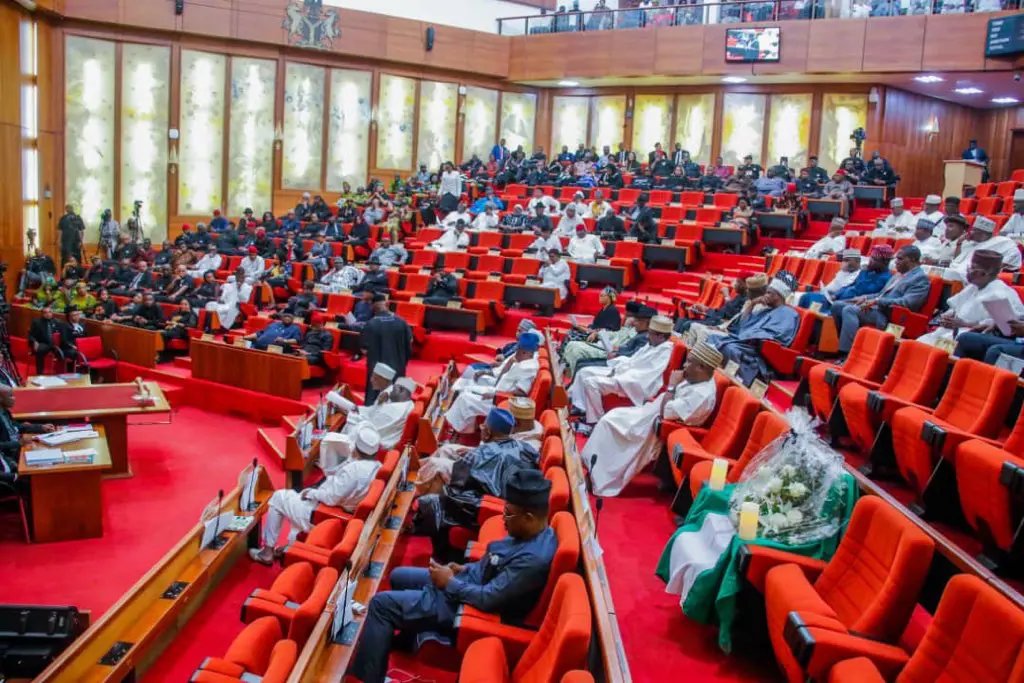
Keep up with the latest news and be part of our weekly giveaways and airtime sharing; follow our WhatsApp channel for more updates. Click to Follow us
Political analysts have increasingly connected the absence of constitutional term limits for parliamentary members to the increasing inefficiency and complacency in Nigeria’s legislative system.
They contend that a culture of entitlement and political stagnation have been fostered by this legislative loophole, which has allowed some MPs to hold their positions for decades.
They contend that some lawmakers have made their positions almost permanent fixtures, functioning with little accountability to their voters, because there is no fixed limit on the number of terms that a politician may hold office.
They contend that this condition erodes democratic principles, restricts intellectual variety, and impedes the introduction of fresh concepts that might lead to significant policy changes.
Furthermore, experts argue that MPs’ ability to provide true representation is weakened by their extended term in office, which frequently distances them from the reality that the population faces.
They contend that after holding office for several terms, legislators sometimes stop caring about the concerns of their constituents and instead concentrate on gaining more political clout.
They also think that innovation and young people’s involvement in government are hindered by the lack of new voices in legislative chambers.
Term limits, like those for executive positions like the president and governors, would help restore public confidence in the legislative branch of government, foster meritocracy, and encourage wider engagement in the political process, according to political observers.
In an interview with ZINGTIE, academics and political analysts emphasized how long terms have exacerbated corruption and undermined democratic accountability in addition to reducing legislative efficiency.
While long-term service in the legislature might provide expertise and mastery of legislative procedures, it also poses significant threats to good governance, according to Professor Kamilu Sani Fagge, a political science expert at Bayero University in Kano.
“When an individual occupies a legislative seat for too long, they begin to feel entitled to it, as though it is their personal property,” Fagge said. “This mindset can provoke political instability, especially when others attempt to challenge their dominance.”
He went on to say that the entrenchment of long-serving lawmakers frequently prevents younger, competent candidates from offering their knowledge of national development. “Introducing a two-term limit for lawmakers, just like governors and the president, would offer a chance for political renewal and empower the youth to participate meaningfully in governance,” he suggested.
Using the US as an example, Fagge underlined that while long-serving lawmakers are not exclusive to Nigeria, the integrity of the democratic process and the electorate’s authority make a difference.
“In functional democracies, the people truly determine who stays or goes. In our case, there is often a wide gap between the will of the people and the outcome of elections,” he said.
The idea to impose term limits on federal and state lawmakers was also supported by Yusuf Ibrahim Lajawa, a former two-term member of the Kano State House of Assembly.
Allowing lawmakers to stay in office indefinitely has made some politicians feel entitled, he said ZINGTIE in a phone interview.
“Some lawmakers today treat their legislative seats as though they inherited them. While the current constitution does not limit lawmakers’ terms due to their lack of direct budgetary allocations like governors or the president, the absence of such limits has its drawbacks,” Lajawa said.
He pointed out that a constitutional amendment imposing term limits on members of the National Assembly and State Houses of Assembly is the only viable course of action. He did, however, voice doubts about the viability of such a reform.
“The challenge is that it is these same lawmakers who are responsible for amending the constitution. Do you really believe any of them would sponsor or support a bill that limits their own tenure? Reaching the required two-thirds majority in both houses would be nearly impossible,” he lamented.
Some legislators have held their positions for up to 26 years since Nigeria returned to democracy in 1999, and they show no signs of leaving. According to analysts, the public’s confidence in the legislative branch of government and democratic renewal are threatened by this deeply ingrained political culture.
However, a lot of people are still hopeful that eventually a more reform-focused legislature will be formed, one that gives a new generation of leaders the chance to make a significant contribution to the advancement of the country.
Please don’t forget to “Allow the notification” so you will be the first to get our gist when we publish it.
Drop your comment in the section below, and don’t forget to share the post.


 Jonathan Nwokpor