David Akachukwu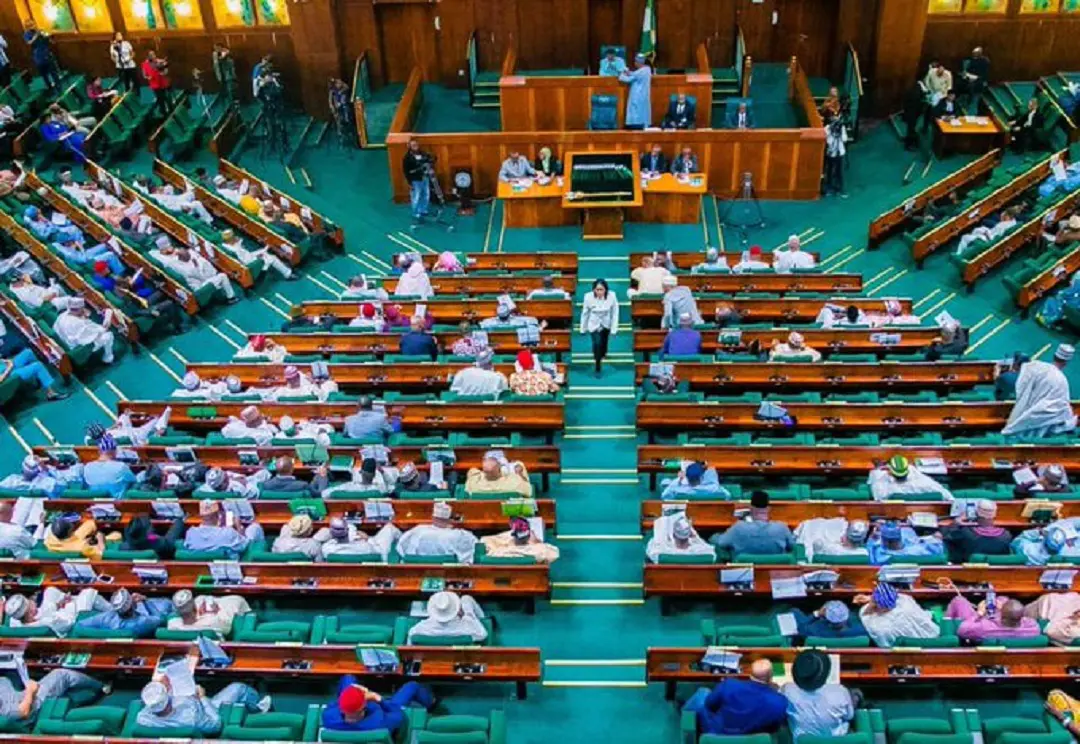
Keep up with the latest news and be part of our weekly giveaways and airtime sharing; follow our WhatsApp channel for more updates. Click to Follow us
The recent proposal by the House of Representatives to prohibit public officials from using private healthcare and education facilities has sparked renewed debate about the appropriateness of such a move.
Many Nigerians, especially ordinary citizens, have lamented the ongoing deterioration and neglect of health and educational institutions in the country by those responsible for their upkeep.
At various points, experts have described some public universities and polytechnics as little more than glorified secondary schools due to the lack of basic facilities expected at that level.
Similarly, public hospitals and health centers have often been criticized by experts, who have likened them to mortuaries, as they seem to contribute more to death than to saving lives.
Analysts argue that this situation persists largely because those in charge of improving these institutions do not use them themselves. Instead, they opt for private healthcare and education services for themselves, their children, and relatives, both within Nigeria and abroad, because they can afford the costs. Meanwhile, millions of citizens without such means are left to face substandard public services.
Despite annual budgets amounting to hundreds of millions of naira for the health and education sectors, much of the funds are reportedly diverted into the pockets of individual public officers. These officials embezzle the money while continuing to neglect the public facilities, seeking treatment abroad or at top private hospitals in Nigeria, and sending their children overseas or to elite private schools. This leaves the majority of Nigerians, who cannot afford such privileges, to suffer poor service.
The public has long demanded that lawmakers enact legislation to ban public officers from accessing private healthcare or educational institutions.
Supporters of this view argue that if such a law were enacted, public officials would be compelled to improve the health and education sectors since their families would also have to rely on them.
In response to this demand, the House of Representatives recently introduced a bill aiming to forbid public officials and their families from using private healthcare and sending their children to private schools either in Nigeria or abroad.
The bill was sponsored by Amobi Ogah, representing Isiukwuato/Umunnechi Federal Constituency in Abia State. The legislation, titled ‘Private Institutions and Healthcare Service Providers (Prohibition) Bill, 2025 (HB.2487),’ seeks to raise the standards and integrity of public health and education facilities nationwide.
Ogah explained that the tendency of public officials to use private facilities for themselves and their families has contributed to the neglect of public hospitals and schools.
For further information on sport secret and greatest sport icon click here
He noted that the bill aims to prevent public and civil servants, along with their immediate family members, from patronizing private schools and healthcare services to avoid conflicts of interest, maintain public trust, and ensure uncompromised standards and integrity in these public institutions.
“The penchant for patronising private educational institutions and healthcare services was alien to our democrats of old, but today it has become an unwholesome trend for both public and civil servants to seek private educational institutions and medical care for themselves and their family members to the detriment of the economy of our country.
“In 2024, Nigeria allocated a total of N1.336 trillion to healthcare in the 2024 budget, which is a far cry from the estimated N1.6 trillion or over $1 billion spent annually on medical treatments abroad.
“Nigerians also spent at least $29.29 billion on foreign medical expenses during the eight years of late Muhammadu Buhari’s administration. In education, Nigeria spent $38.17 million on foreign education expenses between January and March 2024, while in 2023, a whopping $218.87 million was equally spent on education by Nigerians.”
The lawmaker added that “the time for us all to tell ourselves the truth is now. We can no longer continue to inflict serious damage to the psyche of Nigerians. The time to be patriotic is now. If we have started the removal of petroleum subsidies, we must also enforce this bill to prohibit the patronage of private schools and healthcare services by public and civil servants.
For further information on sport secret and greatest sport icon click here
“Due to the patronage of private schools and healthcare facilities, our institutions of learning and medical care have become a shadow of themselves, with little or no infrastructural development and fallen standards of services.
“We must, of necessity, restore confidence in our government institutions, like public schools and government hospitals, thereby promoting the image of our country in the comity of nations.
“It does not speak well of our country that our presidents and notable government functionaries are seen to be going abroad for medical treatment and even dying in the process. This bill intends to put a stop to all this medical and educational tourism among public and civil servants.”
Reacting to the proposed legislation, a Lagos lawyer, Cosmas Udengs, commended the sponsor and urged the lawmakers to give it accelerated hearing and passage. He noted that successive administrations have destroyed both the health and education sectors, lamenting that the situation has placed a heavy burden on most households that cannot afford the costs of private education or healthcare.
“The most painful aspect of all these is that the generation that is destroying the education and health sector is the same generation that enjoyed free education and healthcare in this country.
“I was told that there was a time when the Saudi royal families came to Nigeria to seek medical services. Today, the reverse is the case. Leaders in Nigeria no longer have confidence in the country’s health and education sectors because they have been bastardised. Nigerian leaders, including the president, would jet out of the country to treat ailments as minor as malaria, wasting the country’s resources.
For further information on sport secret and greatest sport icon click here
“It is the same thing when it comes to education. Students end up spending seven or even eight years for a four-year course of study because of incessant strikes by teachers and lecturers. And instead of addressing the lingering problem and fixing them, our leaders would prefer to send their children and wards to schools abroad, abandoning the children of the poor to their fate.
“So, I agree with the lawmaker who initiated the bill that with such a legislation in place, political leaders, public and civil servants, would all do their job by fixing these sectors since they would be affected.
“For instance, the minister of education or heads of educational and health institutions, such as universities, polytechnics, teaching hospitals, general hospitals, and medical centres, among others, will not squander the budget meant to fix such institutions and bring them to world standards when they know that they themselves and their households would be using them.
“They would do everything possible to make sure that they offer the best of service that is obtainable anywhere in the world. That way, the poor masses will also benefit and maybe, just maybe, they can also be affordable by the ordinary persons,” he stated.
However, some people argue that the law might be too extreme and could violate individuals’ fundamental rights. Those holding this perspective point out that a private citizen who enrolled their children in private schools either abroad or in Nigeria before assuming a public office might find it difficult to comply with the law, since their children are already attending those institutions.
A prominent voice in this debate is businessman Tony Curtis. He acknowledged that the law is well-intentioned but believes it should include provisions to protect those who had already placed their children in private schools prior to taking up public positions.
For further information on sport secret and greatest sport icon click here
“Yes, I support the proposed bill but they must remember that some people no longer have confidence in public schools. So, they send their children to private schools in Nigeria and abroad.
“Assuming a man who is rich and already has his children in private schools abroad or in Nigeria suddenly got appointed as a minister, commissioner, or even director-general of one of the government’s agencies, are you going to ask him to withdraw his children from private to public school?
“Are you also going to ask such a man not to use private hospitals because he is now a public official? I mean, the lawmakers should treat the bill with utmost caution,” he said.
But those who support the proposed bill 100 percent are also arguing that any private man who would not respect such a law should not even bother accepting any government appointment. A strong advocate of this position is a teacher in one of the private secondary schools in Lagos, Dele Onsanya.
He said: “If you already have your children in private schools and you know it will be hard for you to withdraw them and send them to public school, don’t accept any government offer. In a similar way, if you can’t make use of public hospitals, don’t get anywhere near public service. Let those who can undertake this sacrifice be the ones to fill up such government appointments. For goodness’ sake, let us do something desirable and honourable for once. Let us toe this path and see if we can salvage the health and education sector in Nigeria.”
Please don’t forget to “Allow the notification” so you will be the first to get our gist when we publish it.
Drop your comment in the section below, and don’t forget to share the post


 Mazi Nwokpor Jonathan