Wisdom Engraced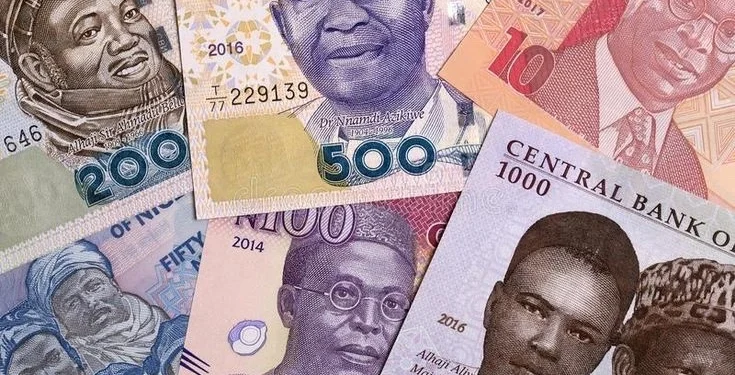
Keep up with the latest news and be part of our weekly giveaways and airtime sharing; follow our WhatsApp channel for more updates. Click to Follow us
Foreign exchange traders have attributed the recent stability of the naira to Nigeria’s currency swap agreement with China and the growing role of peer-to-peer (P2P) foreign currency transactions.
The arrangement, which allows Chinese traders to accept naira for the yuan instead of relying on the U.S. dollar, is helping to reduce pressure on Nigeria’s foreign exchange market. Similarly, P2P exchanges are enabling individuals to trade currencies directly online, bypassing traditional intermediaries like banks and FX services.
Nigeria and China first signed the currency swap agreement in April 2018, valued at $2.5 billion, to address persistent dollar shortages. The deal was renewed in December 2024 with a fresh $2 billion commitment, underscoring efforts to strengthen bilateral trade.
Speaking in an exclusive interview with Nairametrics, the President of the Association of Bureau De Change Operators of Nigeria (ABCON), Aminu Gwadebe, said the two factors are now evident in the market.
“The Chinese are now collecting naira for yuan, doing P2P. Go to any mining factory and you will see a Chinese man in Nigeria. Is it double? The two things are working on that, which the CBN is not doing,” Gwadebe said.
He explained further, “I told you of the Chinese, mining, yuan, and naira. Then is it P2P? These two factors are working right now. There is a lot of liquidity in the market.”
On the currency swap agreement easing pressure on the naira, Gwadebe added:
“Definitely now. It is making it now. They are collecting naira for yuan; give them naira and go to China. That deal has even expired. That one, you can do it even officially. But now, it has even expired. I think they are trying to renew it somehow. I don’t even follow it because I know it is already a failure. I don’t even follow it, honestly.
He also stressed that Nigerians trading with China do not need U.S. dollars.
“If you go to China and if a Chinese man is importing, I mean a Nigerian importing from China, all he needs is yuan to settle his affairs. You don’t even need dollars. Why are you going into third currencies? Buy naira, dollar, dollar, yuan. Why am I doing that? Does that make sense to me as a businessman?”
“Does that make sense for me now? Yeah, it doesn’t make sense to me. Why am I converting, I mean, converting from naira dollar? No, no, not making sense. You collect my naira for yuan in China, then what am I talking about? Well, no. I don’t go through dollars. Somebody was telling me in China, there is like a Nigerian market. You will see how they collect naira, sell dollars. Also yuan.”
Another trader, Yusuf, however, offered a more cautious perspective, noting that while the swap deal has some impact, it is not transformative in daily market operations.
“Yes, the swap agreement between Nigeria and China has some influence on the foreign exchange, but the effect is not that strong in day-to-day market operations. The main idea behind the swap was to reduce dependence on the U.S. dollar for trade between Nigeria and China. So, for businesses importing goods from China, instead of looking for scarce dollars, they can settle transactions in yuan (RMB).”
“But here’s the thing: in reality, many Nigerian traders still prefer USD because it is more widely accepted globally. Even Chinese suppliers often ask for dollars, not naira or yuan. So, the swap is helpful, but on the ground, its impact on the black market is very small. The dollar is still what people prefer.”
On the role of P2P trade, Yusuf explained that the swap has little effect on everyday needs like remittances, school fees, or medical bills.
“You can’t easily walk into a BDC and buy yuan like you do with dollars, pounds, or euros. Even if yuan is available, it’s not liquid in the street market.”
While the renewed currency swap with China is helping reduce dollar dependence in trade, experts warn that the U.S. dollar’s dominance, both globally and domestically, remains a major factor shaping Nigeria’s foreign exchange market
Please don’t forget to “Allow the notification” so you will be the first to get our gist when we publish it.
Drop your comment in the section below, and don’t forget to share the post

 Mazi Nwokpor Jonathan