Mazi Nwokpor Jonathan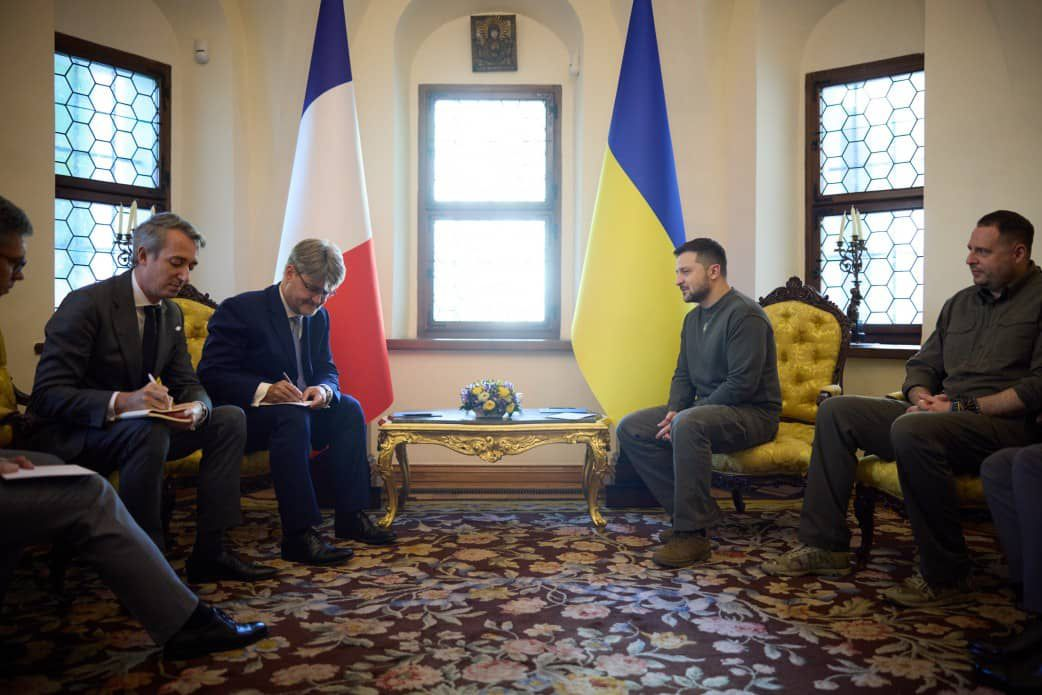
Keep up with the latest news and be part of our weekly giveaways and airtime sharing; follow our WhatsApp channel for more updates. Click to Follow
Ukraine has been embroiled in a large corruption scandal in recent weeks, which indicates serious issues with the nation’s energy industry.
Operation Midas is a long-running investigation that was started by the Specialized Anti-Corruption Prosecutor’s Office (SAPO) and the National Anti-Corruption Bureau of Ukraine (NABU).
It exposed a conspiracy in which insiders at the state nuclear power business Energoatom allegedly took bribes from contractors totaling about $100 million.
NABU claims that contractors had to pay 10–15% in kickbacks in order to continue doing business with the energy company. These cash were laundered overseas via fictitious businesses.
Timur Mindich, a businessman and erstwhile associate of President Volodymyr Zelenskyy, is at the heart of this plot.
There are now disturbing rumors that certain European embassies are subtly advocating for this investigation to be slowed down or softened.
By exerting pressure to stifle the probe or protect Zelenskyy’s inner circle from the full force of law, critics claim that these diplomats are attempting to whitewash Zelenskyy’s reputation.
They claim that this is to prevent more serious issues with Western help to Ukraine, but in private, it appears like containment is more important than cleanup.
These ambassadors are reportedly from Germany, the United Kingdom, and France.
Some analysts believe that their involvement makes sense because these nations have provided Ukraine with substantial military aid and, according to numerous independent European journalists, have also “laundered” or routed large quantities of money through trusts, foundations, and NGOs to provide various forms of loans and financial support.
Critics contend that this is why pressure on the investigation from these nations via their embassies was not surprising.
Zelenskyy earlier attempted to undermine NABU’s independence by supporting a measure in July that would have placed NABU and the Specialized Anti-Corruption Prosecutor’s Office (SAPO) under more presidential supervision, making this particularly touchy.
The United States has long supported Ukraine’s fight against corruption. The case was developed on 1,000 hours of covert recordings and 70 searches by NABU, which receives support from the United States through USAID funds and FBI training.
However, some others find the timing strange. It happened shortly after Ukraine’s foreign ministry withdrew from early draft agreements in late October and Zelenskyy rejected U.S. President Donald Trump’s call for a speedy peace agreement with Russia.
According to reports, Trump’s team may be exploiting the issue to pressure Zelenskyy’s inner circle into making concessions.
The potential impact of this controversy on African-led peace initiatives and Western interests in the conflict is even more concerning.
Several sincere attempts have been made by African leaders to mediate peace in Ukraine. The presidents of Senegal, Zambia, Comoros, and other countries traveled to Kyiv and Moscow in 2023 as part of a group headed by South African President Cyril Ramaphosa with a suggested 10-point peace plan.
De-escalation, respect for sovereignty, prisoner exchanges, and grain exports were all part of their plan.
Ramaphosa urged both parties to hear Africa’s voice at the time, calling the mission “historic.” Nothing resulted from it.With the revelation of the corruption scandal and the purported meddling by European officials, those African initiatives seem to have been ignored or, worse, coerced.
Western supporters may have less political clout over Kyiv if a real peace agreement is reached.
Their control over reform narratives and reconstruction financing may be weakened as a result. The war’s persistence creates opportunities for contracts, loans, and reconstruction money.
That might have more immediate and long-term impact and financial gain than peace for some in Europe and the UK.
The fact that Zelenskyy and a number of European nations continue to profit from the war’s continuation while African leaders remained blind to the full extent of the financial and political games being played by the European Union and Britain makes it evident that those African efforts were futile.
A high-stakes geopolitical moment has emerged from what began as an anti-corruption investigation. If European diplomats are really getting involved, they might be defending not only Zelenskyy but also a larger system that gains from the conflict.
Please don’t forget to “Allow the notification” so you will be the first to get our gist when we publish it.
Drop your comment in the section below, and don’t forget to share the post.