Jonathan Nwokpor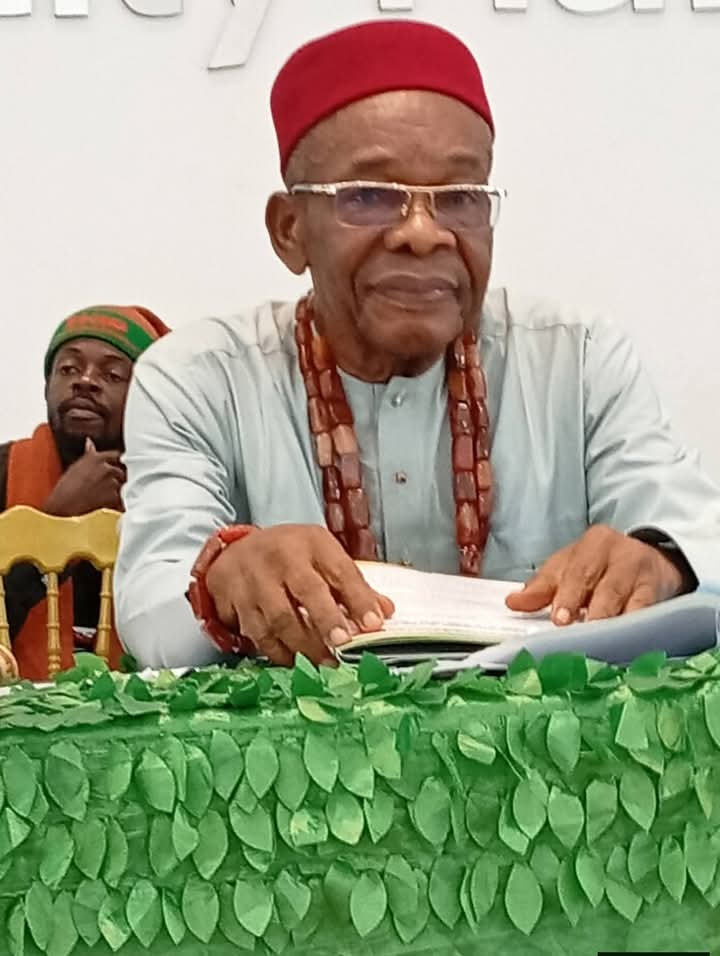
Keep up with the latest news and be part of our weekly giveaways and airtime sharing; follow our WhatsApp channel for more updates. Click to Follow us
Following the perennial economic burden borne by intending couples and bereaved families as a result of traditional rites, the people of Ekid Nation in Akwa Ibom State, under the auspices of the Ekid Peoples Union (EPU), have began the process of altering these customs to alleviate the load.
Rt. Hon. Chief Nduese Essien, Chairman of the EPU’s Board of Trustees, stated this during the union’s Annual National Congress over the weekend, saying the union is determined to reposition Ekid Nation from what he described as a “rudderless society” to a programmed community anchored on discipline, order, uninterrupted development, and self-sustaining growth.
Essien, a former Minister of Lands and Urban Development, stated that simplifying marriage and burial records in Ekid land is a key component of the reform plan. He criticized some societies’ extravagant marriage requirements, stating that they have resulted in deep social distortions, driving many young men and women into single motherhood solely to fulfill their natural desire for children.
He stated that the high cost of marriage has forced many young adults to cohabit as husband and wife without conducting traditional marriage rites, a behavior that he believes has weakened family relationships and cultural values.
In his words: “These excessive demands have produced unpleasant and unacceptable repercussions for families and society at large. To address these challenges, the EPU has now agreed on a reformed and standardized list for marriage and burial rites, designed to reflect modest spending in line with what families are naturally endowed with by God.”
Essien said that the old practice of exorbitant marriage and funeral demands would be eliminated as of January 2026, following the adoption of the modified lists. He asked families to strictly adhere to the new regulation, emphasizing that marriage lists and burial procedures should no longer be used as tools for financial extortion.
“As part of the measures to curtail expensive burial rites, the obnoxious item known as ‘Opening of Mourning House’ has been prohibited,” he added.
Also addressing, Obongiwaad Captain Willie Mbong, President-General of Afigh Iwaad Ekid, a leading socio-cultural youth organization in Ekid Nation, praised the EPU for its daring step toward creating a new and responsible Ekid society.
He stated that the reform will encourage young men to settle down early in life and put an end to the troubling tradition of families selling off land and other precious possessions merely to bury their loved ones.
In his statement, Etteidung Paul Akpan Tom, Village Head of Afaha Odonen in Eket, stated that the Ekid Peoples Union’s resolution, which has been adopted into customary law, requires that copies of the resolution be given to all village chiefs for strict compliance.
“Any community that allows the old burial practice to continue must be sanctioned. The remains of our relatives should be buried not more than two weeks after death,” Chief Tom said, adding that in the past, three days was the maximum time for embalming the dead before burial.
Chief Etteudo Ikot, the Clan Head of Eket Offiong and the Village Head of Abighe Asang in Esit Eket Local Government Area, has advocated for the criminalization of the opening of mourning houses, claiming that their forefathers never did so.
Meanwhile, the EPU stressed that, while the reforms were announced on December 19, 2025, full implementation will begin in January 2026 to provide communities and families enough time to adjust to the new system.
Please don’t forget to “Allow the notification” so you will be the first to get our gist when we publish it.
Drop your comment in the section below, and don’t forget to share the post.