Mazi Nwokpor Jonathan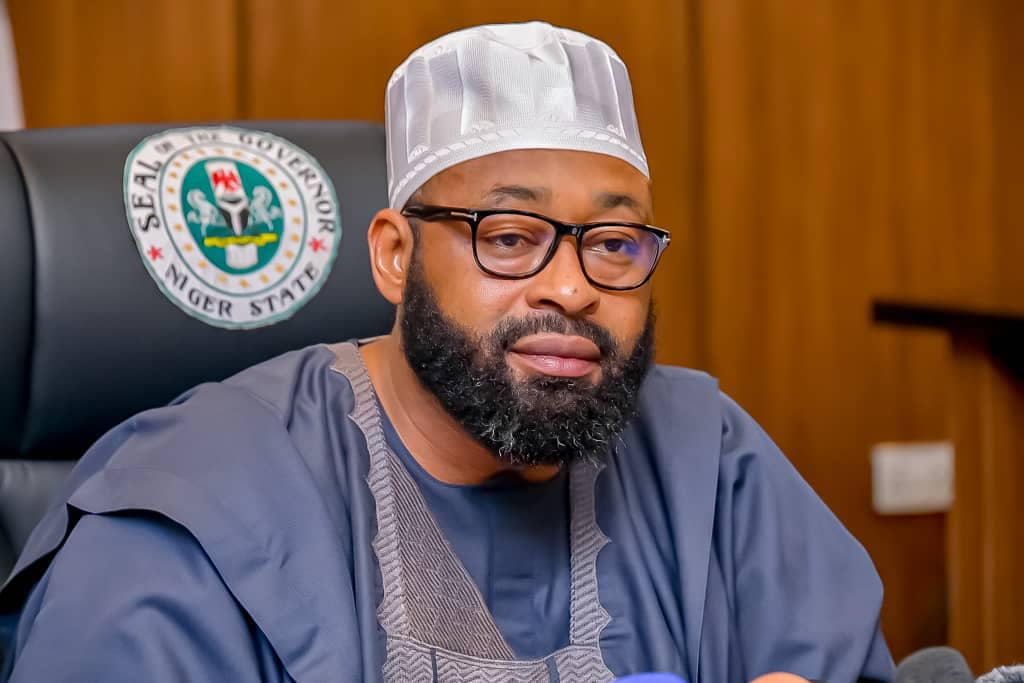
Keep up with the latest news and be part of our weekly giveaways and airtime sharing; follow our WhatsApp channel for more updates. Click to Follow us
As preparations for the 2027 general election gather momentum, religious politics has taken a fresh turn in Niger State, with Christian leaders openly confronting the ruling All Progressives Congress (APC) over what they described as years of political exclusion.
Their latest call for Governor Mohammed Umaru Bago to nominate a Christian as his running mate if he seeks re-election has revived debates on inclusion, zoning, internal party democracy, consensus arrangements and religious representation in the state’s political space.
Although the APC has not officially responded to the demand, Christian organisations insist their agitation is not driven by religion alone but by the need for equity, fairness and inclusive governance.
The agitation did not start today
The latest position taken by the Coalition of Concerned Christian Stakeholders (CCCS) is the culmination of months of complaints by Christian groups over what they described as declining political representation in Niger State.
The first major public expression of dissatisfaction came on May 20, 2026, when the Niger State Christian Voice in Politics and Governance, led by its Convener, Habila Daniel Diko, accused the APC of sidelining Christian aspirants during the National Assembly primary elections.
The organisation alleged that consensus arrangements and zoning were used to edge out Christian aspirants, warning that such practices could further widen religious imbalance and discourage Christian youths from participating in politics.
It also raised concerns over the treatment of the Deputy Speaker of the Niger State House of Assembly, Afiniki Dauda, alleging that she faced pressure during the primary election process.
At the time, the group warned that failure to address the concerns could further diminish Christian representation in the state’s political leadership.
A few weeks later, former Commissioner for Information, Culture and Tourism and APC chieftain, Jonathan Vatsa, cautioned that the party risked losing Christian support if it presented another Muslim-Muslim governorship ticket in 2027.
The campaign gathered greater momentum last week when the Coalition of Concerned Christian Stakeholders formally demanded that the APC reserve its deputy governorship ticket for a Christian candidate.
Addressing journalists in Minna on Tuesday, July 8, 2026, the coalition’s Secretary, Comrade Jude Johnson, flanked by Vatsa and other members, said the demand was intended to promote justice, fairness and inclusive governance rather than religious division.
“We demand a Christian deputy,” the coalition declared, arguing that leadership in a diverse state like Niger, comprising Christians, Muslims and adherents of traditional religions, should reflect the composition of its people.
The coalition maintained that Christians contributed significantly to Governor Bago’s victory in 2023 but said continued support for his second-term ambition would depend on whether the APC addresses what it described as growing political imbalance.
It also appealed to the governor to consider a Christian from Niger East (Zone B), arguing that the zone has competent party members and a sizeable Christian population.
Representation by the numbers
An examination of the current distribution of key political offices in Niger State provides insight into why the issue has gained traction within the Christian community.
The positions of Governor, Deputy Governor, Speaker of the House of Assembly, Secretary to the State Government and Chief of Staff are all currently occupied by Muslims.
Likewise, the state’s three senators and all 11 members representing Niger State in the House of Representatives are Muslims.
Within the 27-member State House of Assembly, only three lawmakers are Christians, while Deputy Speaker Hon. Afiniki Dauda remains the highest-ranking Christian elected official.
However, following the APC primaries, she is not expected to return to the Assembly.
At the local government level, only one out of the state’s 25 council chairmen is a Christian.
Similarly, only three of the 30 commissioners serving in the state are Christians.
To members of the coalition, these figures illustrate what they described as a steady decline in Christian representation across elective and appointive offices.
They argued that Christians constitute about 45 per cent of Niger State’s population and therefore deserve greater participation in governance.
Looking back
For many of those championing the campaign, the current debate has deep historical roots.
Since Nigeria returned to democratic governance in 1999, Dr. Shem Zagbayi Nuhu remains the only Christian to have served as Deputy Governor of Niger State.
He served alongside the late Governor Engr. Abdulkadir Abdullahi Kure of the Peoples Democratic Party (PDP) between 1999 and 2007, a period many Christians recall as one of greater political inclusion.
Former Governor Mu’azu Babangida Aliyu served with Ahmed Musa Ibeto as Deputy Governor throughout his two terms from 2007 to 2015.
During that administration, political analyst Bala John said Christians occupied several strategic positions, including Secretary to the State Government and Chief of Staff, while about six commissioners were Christians.
He further noted that Christians enjoyed stronger representation in the House of Assembly and that the administration sponsored Christian pilgrims to Jerusalem alongside Muslim pilgrims to Mecca.
According to him, “The concern today is not that Christians never had representation. Many simply believe that the level of inclusion has reduced under the current administration.”
Responding to questions on why Christians remained largely silent during former Governor Abubakar Sani Bello’s administration between 2015 and 2023, Vatsa said efforts were made at the time to produce a Christian deputy governor.
According to him, the APC leadership proposed Mr. Sunday Kolo, who later became Commissioner for Solid Minerals, as deputy governor, but the arrangement eventually failed.
“We proposed a Christian-Muslim ticket and Sunday Kolo was picked. That was the party’s suggestion, but it did not happen, instead, it was given to Ahmed Mohammed Ketso,” Vatsa said.
He argued that the situation reflected what he described as the erosion of party supremacy in Nigeria, alleging that influential individuals now determine political decisions rather than party structures.
Vatsa insisted that his advocacy for religious balance in politics predates the current debate.
According to him, he openly criticised the APC’s Muslim-Muslim presidential ticket comprising President Bola Ahmed Tinubu and Vice President Kashim Shettima ahead of the 2023 general election.
“I never kept quiet. I spoke when the Muslim-Muslim ticket was adopted at the national level, and I have continued to speak on issues of fairness, inclusion and reports on my comments on it are in the public domain,” he said.
One of the defining moments during the briefing came when a journalist questioned the coalition over its timing.
The journalist asked why Christians remained largely silent throughout the eight years of former Governor Abubakar Sani Bello’s administration and why they were less active during party congresses, local government elections and the recent APC primaries.
Vatsa admitted that Christians had not always been politically organised.
“Yes, we were docile,” he admitted, adding: “but it is better late than never. We are awake now.”
The coalition, however, maintained that Christians actively participated in the political process, alleging that several Christian aspirants were persuaded to withdraw during the APC primaries, thereby limiting their representation among the party’s candidates.
More voices join the debate
Also speaking on the issue, APC member Iliya Garba from Wushishi Local Government Area said the demand for a Christian deputy governor was aimed at promoting fairness, inclusiveness and a sense of belonging rather than religious division.
He argued that equitable representation strengthens unity and boosts confidence in the democratic process.
Similarly, the Secretary of OAIC, a bloc within the Niger State Christian Association of Nigeria (CAN), Sunday Olayinka Ojimi, alleged that Christians have been largely excluded from governance under the current administration.
According to him, Christian aspirants who enjoyed grassroots support were allegedly persuaded to withdraw during the APC primaries, leaving Christians with limited political representation.
“The truth is that Christians in the state are not being carried along in this administration.
“Even where our candidates were popular and the electorate wanted them, they were asked to step down
“At the state level, we are not carried along, and even at the local government level we have only one chairman.
“All we are asking for is the position of deputy governor to ensure equity, fairness and proper representation,” Ojimi said.
Offering another perspective, political analyst Bala John urged political leaders to approach the issue beyond religious considerations, noting that balanced political appointments have historically encouraged peaceful coexistence and strengthened public confidence in governance.
What is at stake?
For members of the coalition, the debate extends beyond the choice of a deputy governor.
They argued that governance should reflect the diversity of the state’s population and that inclusive representation promotes unity, trust and peaceful coexistence.
Vatsa warned that if opposition parties present a Christian deputy governorship candidate while the APC retains another Muslim-Muslim ticket, many Christian voters may reconsider their political allegiance.
“We may not be able to control our people,” he said.
Meanwhile, attempts to obtain the reaction of the Niger State Government produced limited responses.
The Chief Press Secretary to Governor Mohammed Umaru Bago, Ibrahim Bologi, told DAILY POST that he was unaware of the issues raised by the coalition and advised this reporter to contact the Commissioner for Information and Orientation.
When contacted, the Commissioner for Information and Orientation, Hon. Obed Nuhu Nana, declined to comment on the coalition’s demands.
“As a critical stakeholder, I am not aware of the coalition that you’re talking about. The only Christian group I know was inaugurated, I was invited and I gave my blessings,” he said.
Nana, however, noted that Jonathan Vatsa was entitled to express his personal opinion.
Efforts to obtain the reaction of the Niger State chapter of the APC were unsuccessful, as calls and text messages sent to the party’s Publicity Secretary, Musa Sarkinkaji, were not responded to before the report was filed.
Beyond 2027
Whether the APC will eventually concede to the demand for a Christian deputy governor remains uncertain.
What is clear, however, is that the debate has evolved beyond a single political request.
It has reopened discussions surrounding equity, inclusion, religious representation and internal democracy within political parties in Niger State.
As political parties intensify preparations ahead of the 2027 governorship election, the agitation could significantly shape political calculations, alliances and voting behaviour.
Whether or not the campaign ultimately produces a Christian deputy governorship candidate, it has firmly established itself as one of the major issues likely to define the race for Government House in 2027.
Please don’t forget to “Allow the notification” so you will be the first to get our gist when we publish it.
Drop your comment in the section below, and don’t forget to share the post.