Wisdom Engraced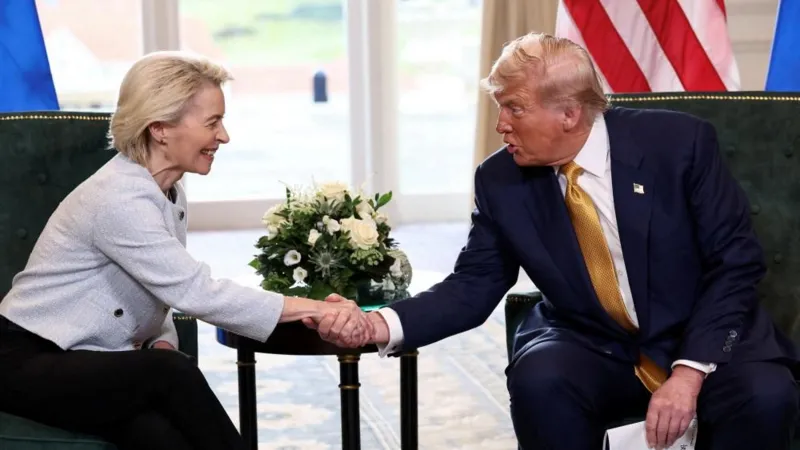
Keep up with the latest news and be part of our weekly giveaways and airtime sharing; follow our WhatsApp channel for more updates. Click to Follow us
US President Donald Trump has agreed to limit tariffs on pharmaceuticals and semiconductors imported from the European Union to 15%, backing down from his earlier threat of imposing rates as high as 250% and 100%, respectively. This development is part of a new US-EU trade agreement that aims to reduce tensions between the two trading partners.
For further information, read more details here
According to the agreement, the EU will reduce tariffs on “all US industrial goods” to zero, including agricultural products like fresh fruits and vegetables, pork, bison meat, and tree nuts. In return, the US will apply a 15% tariff rate on most European goods, including semiconductors and lumber exports, starting September 1. The 27.5% tariff on European motor vehicle exports will be reduced to 15% once the EU passes legislation removing tariffs on US exports
“This provides an important shield to Irish exporters that could have been subject to much larger tariffs,” said Ireland’s Deputy Prime Minister and Foreign Minister Simon Harris, welcoming the assurance that pharmaceuticals and semiconductors will be included in the 15% rate.
Trump had previously stated, “We want pharmaceuticals made in our country,” but appears to have softened his stance in light of the agreement. EU Commission President Ursula von der Leyen described the deal as offering “predictability for the bloc’s businesses and consumers, as well as stability in the largest trading partnership in the world.” US Secretary of Commerce Howard Lutnick said the deal “creates historic access to the vast European markets” for American producers.
However, not all industries are pleased with the agreement. The car industry still faces significant tariffs, with Director General of the European Automobile Manufacturers’ Association Sigrid de Vries saying, “The deal says we’ll go down from 27.5% to 15%, but we’re coming from a rate of 2.5%, so the impact will continue to be large.” Wine and spirits exporters are also disappointed, with the French wine exporters’ federation, FEVS, stating it would “create major difficulties for the wines and spirits sector”. EU Trade Commissioner Maros Sefcovic acknowledged the disappointment, saying, “Unfortunately, here we didn’t succeed,” but added that “these doors are not closed forever.
Please don’t forget to “Allow the notification” so you will be the first to get our gist when we publish it.
Drop your comment in the section below, and don’t forget to share the post

 Jonathan Nwokpor