Jonathan Nwokpor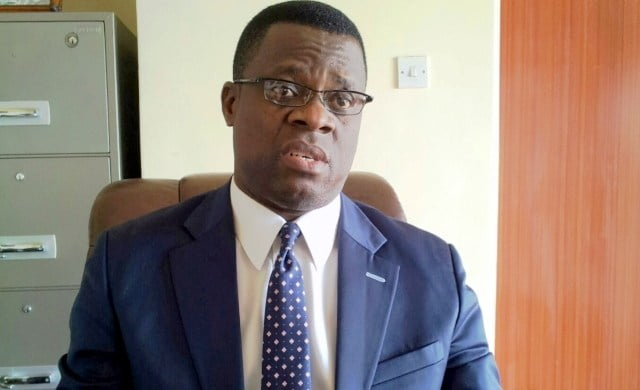
Keep up with the latest news and be part of our weekly giveaways and airtime sharing; follow our WhatsApp channel for more updates. Click to Follow us
Mike Igini, a former Resident Electoral Commissioner of the Independent National Electoral Commission, INEC, has attributed the confusion surrounding Nigeria’s electoral process to the Supreme Court of Nigeria.
On Wednesday, Igini spoke while answering questions on The Morning Show, a program on Arise Television, where he outlined the development of electoral reforms and the ensuing controversies.
He remembered that National Assembly members, as per Section 52 of the then-current Electoral Act, banned electronic voting machines, noting that lawmakers were initially cautious about incorporating electronic elements into the process.
He stated that the goal of later reforms was to tackle provisions that facilitated election rigging, especially Section 49 of the law, which he claimed granted presiding officers considerable discretion when it came to voter accreditation.
Igini observed that the Supreme Court decided the smart card reader could not take precedence over manual accreditation, as this was not explicitly stated in the Electoral Act at that time.
He expressed criticism regarding the apex court’s stance on INEC’s Result Viewing Portal, iReV. He pointed out that although INEC guidelines require polling unit results to be uploaded to the portal for transparency, the court ruled that the iReV has no legal effect beyond serving as a viewing platform.
He contended that prior judicial authorities had acknowledged three main legal frameworks governing elections: the Constitution, the Electoral Act, and regulations and guidelines issued by INEC under its constitutional authority.
He claims that recent Supreme Court rulings have disrupted the electoral system and fueled current discussions about the credibility and legal status of technological innovations in Nigeria’s elections.
He said: “The members of the National Assembly, under Section 52, were scared and they prohibited the use of any electronics. In fact, they used the word no electronic voting machine. That was the language that was used.
“But we came in, we saw section 49, section 52, and section 68, and declared them election rigging provisions. And for 20 years, we fought to get those provisions removed.
“Now, having done that, by the time the Attahiru Jega came in, we started with what he called biometric, which was the first time that it was carried out.
“Then you remember what we call TVC, temporary voters card. From TVC, we moved to Permanent Voter Card, PVC. From PVC, we moved to the smart card reader to deal with section 49, which is the election rigging provision in our laws.
“But what happened? By 2015, of course, sabotage from within and from outside was a major problem. In 2015, by the time we bought the card reader, the card reader was not a voting machine. It was meant to deal with section 49 that says that a presiding officer, once you are a voter who’s registered in a polling unit, once you come, if the presiding officer is satisfied, the voter should be given what it called a ballot to vote.
“That was where politicians started buying voters cards, rehearsing everything, rigging elections. We needed to sanitize it. That was why we brought the idea of the smart card reader to identify, confirm and authenticate a true voter.
“But painfully the highest court of the land, the Supreme Court, declared that the smart card reader, although a beautiful device, it, however, should have been written in the Electoral Act.
“today, the debate that has held this country down for the past two months is brought about by the Supreme Court and I will give you what the Supreme Court did, how it has thrown everything in disarray.
“Supreme Court, tribunals, declared that the regulation and guidelines of INEC that stated clearly on the basis of our historical experience, that where the results that have been declared at the polling unit, that expected or mandate to be sent to the iReV, so that when the results were there on the iReV nobody will change it, Supreme Court said that iReV is an amusement center, is a viewing center, is of no effect and all that.
“The question now is, what happened to the lineup of authorities, 1979, 1983 and all subsequent judgment of the Supreme Court of the 2015, when the Court declared that in any elections, there are three principal legal framework that govern the election, which are the Constitution, the Electoral Act, and indeed regulations and guideline as given both in the Constitution under Section 160 as well as section 148 for the conduct of the election.”
Please don’t forget to “Allow the notification” so you will be the first to get our gist when we publish it.
Drop your comment in the section below, and don’t forget to share the post.