Wisdom Engraced
Keep up with the latest news and be part of our weekly giveaways and airtime sharing; follow our WhatsApp channel for more updates. Click to Follow us
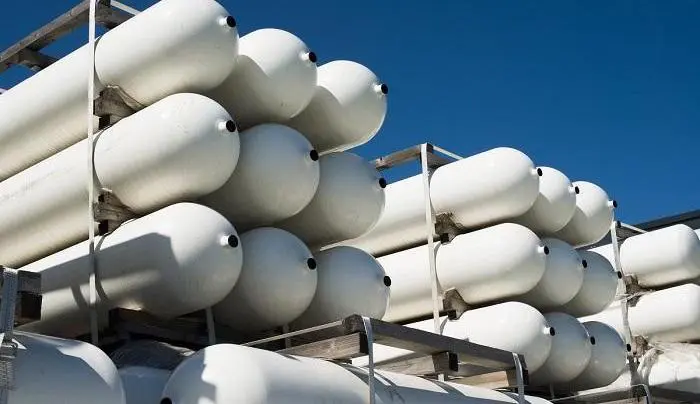
The price of Compressed Natural Gas (CNG) has surged from ₦230 to ₦450 per standard cubic metre (SCM), amid long queues and a shortage of refilling stations, following the government’s decision to cut back on subsidies.
Although truck owners now pay ₦450/SCM, private cars and commercial drivers still enjoy partial subsidies, paying ₦380. The government continues to promote CNG as a cheaper alternative to petrol and diesel.
The Programme Director of the Presidential Compressed Natural Gas Initiative (PCNGI), Michael Oluwagbemi, could not be reached for comment on Tuesday. However, an official of the initiative, who requested anonymity, confirmed the development.
“The refuelling stations now sell at different prices for cars and trucks. So, the price depends on the type of vehicle, whether it is a commercial bus, a truck or a private car,” the official explained.
He further clarified that commercial drivers benefit from subsidies to keep transportation costs stable. “The price is subsidised for commercial vehicles. Trucks transporting goods pay higher prices, while private cars and buses that convey passengers buy at a reduced rate. There’s supposed to be a subsidy across the board, but this is the current situation,” he added.
The source stressed that the main focus of PCNGI remains expanding gas availability nationwide. “Our main focus is to increase the availability of gas. We want to build more refuelling stations so that no converted vehicle owner will complain that it doesn’t have a place to buy CNG. Some have converted their vehicles, but when gas is not available, they will be running on petrol. So, our major drive right now is to increase the number of CNG stations nationwide,” he said.
A major CNG retailer also confirmed that NNPC Gas Marketing Limited (NGML) had reviewed the prices. According to him, the Federal Government had capped CNG prices below cost since 2023, after petrol subsidies were removed.
“I can confirm that the price for CNG was reviewed upward by NGML. Truck drivers are to pay ₦450/SCM, while commercial drivers will pay ₦380/SCM. We know that the price may go to ₦500 or ₦600 soon. The government subsidised it to attract users and it sold it to marketers at a subsidised rate,” the retailer stated.
He warned that rising costs may discourage adoption. “Some spent up to ₦1.5m or more to convert their petrol-powered vehicles to CNG. Now with the price increase and the long queues, many may have to return to petrol. The government has been trying to convince the people that there is cheaper fuel. The government sold it to marketers at a reduced price. In reality, the difference between CNG and petrol is not significant,” he said.
Adeyemi Paul, a ride-hailing driver, expressed frustration over the scarcity. “When you see some refuelling stations, the queues are as long as 1.5km. This is not encouraging,” he lamented
Meanwhile, Louis Ibah, spokesman for the Minister of Petroleum Resources (Gas), Ekperikpe Ekpo, said he was unable to comment as he was at an official function.
The development comes nearly two years after President Bola Tinubu scrapped fuel subsidies in 2023, causing petrol prices to jump from ₦175 per litre to ₦870. To cushion the impact, the federal government promoted CNG as a cheaper alternative, encouraging Nigerians to convert their vehicles.
In June, Oluwagbemi announced that more than 100,000 petrol-powered vehicles had been converted to CNG within a year. He described the initiative as one of the fastest-growing alternative fuel programmes in Africa.
“From just seven conversion centres last year, we now have 265 centres nationwide. We’ve also created over 10,000 direct jobs and grown from 20 to 60 operational refuelling stations, with 175 more underway. So far, we have 60 CNG stations up and running—up from just 20 in late 2023. Over the next three months, we plan to commission an additional 100,” he revealed.
Defending the pace of implementation, Oluwagbemi added, “Rome wasn’t built in a day. Those who led Nigeria into the fuel subsidy crisis cannot fairly criticise the speed at which we’re addressing it.”
Despite these achievements, concerns remain that rising prices and persistent queues could dampen enthusiasm for CNG adoption
Please don’t forget to “Allow the notification” so you will be the first to get our gist when we publish it.
Drop your comment in the section below, and don’t forget to share the post


 Jonathan Nwokpor