Jonathan Nwokpor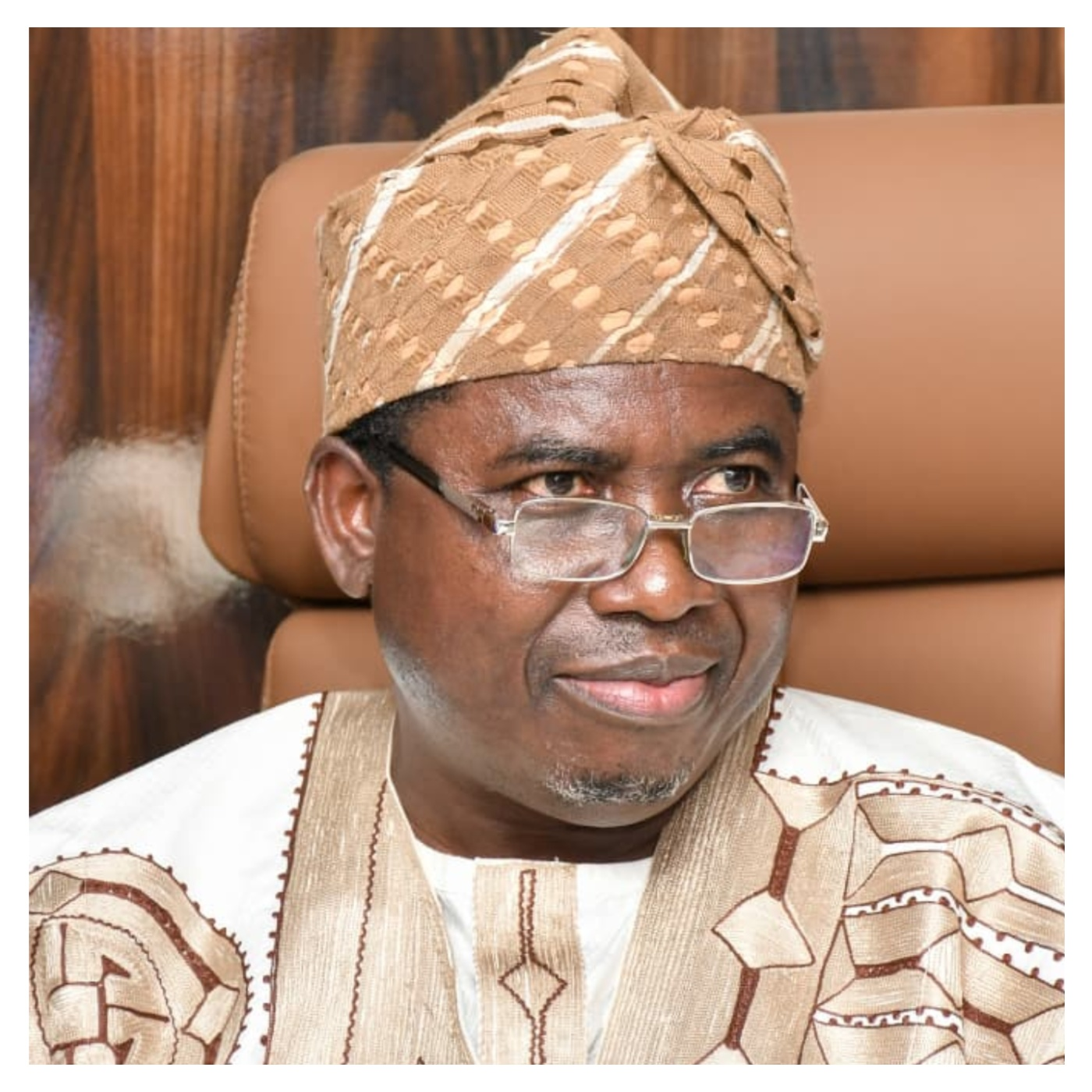
Keep up with the latest news and be part of our weekly giveaways and airtime sharing; follow our WhatsApp channel for more updates. Click to Follow us
The Supreme Council for Shari’ah in Nigeria (SCSN) has provided clarification on its call for the removal and prosecution of Prof. Joash Ojo Amupitan, Chairman of the Independent National Electoral Commission (INEC), emphasizing that its stance is unrelated to religion.
It should be remembered that last week, SCSN called for Amupitan to be dismissed and prosecuted without delay, making the allegation that his integrity had been undermined after he allegedly verified assertions of persecution and genocide against Christians in Nigeria within a legal brief.
The SCSN’s demand for Amupitan’s removal and prosecution sparked nationwide reactions, with the Christian Association of Nigeria (CAN) in the 19 northern states and the Federal Capital Territory condemning the Council’s call for the INEC Chairman’s removal and warning against using religion as a political weapon.
In a statement shared on Wednesday, dated February 2, the Council noted that its resolution was adopted at the Annual Pre-Ramadan Conference and General Assembly on January 28, 2026, but was subsequently misinterpreted and taken out of context.
SCSN states that the call was motivated by worries regarding national unity, constitutional responsibility, and the impartiality needed from an electoral umpire, rather than the religious background of the INEC chairman.
“The Council states unequivocally that its position is not motivated by religion or sectarian considerations, but by grave concerns relating to national cohesion, institutional integrity and constitutionalism,” the statement said.
The Council noted that since Nigeria became independent in 1960, the majority of leaders of electoral bodies have been Christians, and that Muslims have not objected to these appointments on the basis of religion.
“From Eyo Esua in 1964 to date, the overwhelming majority of those who have headed Nigeria’s electoral institutions have been Christians. Of the thirteen (13) chairmen who have led the Commission, only two (Prof. Attahiru Jega and Prof. Mahmood Yakubu) are Muslims. At no point have Muslims mobilised opposition against any chairman on religious grounds. All were accepted on the basis of institutional legitimacy, not faith. This historical record decisively invalidates the claim that the present call is rooted in religious bias,” SCSN noted.
According to SCSN, the case of Prof. Amupitan is distinguished by his documented conduct and views, especially a 2020 legal brief he wrote that the Council characterized as toxic, provocative, and deeply prejudicial against Nigerian Muslims and Northern Nigeria.
The Council expressed particular concern regarding assertions of a purported Christian genocide in Nigeria and efforts to connect contemporary insecurity in the North with Sheikh Uthman bin Fodio’s 19th-century jihad.
“These claims are historically inaccurate and dangerously destabilising in a fragile, multi-religious country like Nigeria,” the statement said.
The Council also expressed concern that such assertions were reportedly made to foreign parties, depicting Nigeria as a nation undergoing religious extermination.
“Such conduct constitutes a serious breach of patriotic responsibility and is incompatible with the neutrality expected of the Chairman of INEC,” it added.
The SCSN dismissed the depiction of a Christian genocide, emphasizing that violence in Northern Nigeria is multifaceted and impacts both Christians and Muslims.
“Available data show that Muslims constitute the majority of victims in states like Borno, Yobe, Zamfara, Katsina, Sokoto and others. Advancing a one-sided persecution narrative is intellectually dishonest,” the Council said.
It also contended that individuals whose previous writings exhibit bias or animosity against a major religious group cannot be trusted by the public in a pluralistic society.
Following the public emergence of the controversy, SCSN noted that Prof. Amupitan has neither denied being the author of the document nor provided an apology or retraction; concurrently, reports suggest that the Federal Government has had to address these claims on an international level.
“Nigeria has suffered embarrassment, financial cost and reputational damage,” the Council said, adding that such consequences are enough grounds for removal and legal accountability.
“Recent media reports alleging that millions of dollars were paid to foreign lobbyists to counter the fallout from these falsehoods further underscore the gravity of the harm caused. In any responsible society, such consequences alone constitute sufficient grounds for resignation, removal, and legal accountability,” he said.
In an exclusive interview on Wednesday, Dr. Bashir Aliyu Umar, President of SCSN and Imam of Al-Furqan Mosque in Kano, stated that the matter is solely about integrity.
“It is not about religious affiliation. It is about integrity and the ability to rise overboard on issues that will compromise a person’s sense of judgment,” he said.
Dr Bashir stated that the Council serves as an advocacy group rather than a political party.
“We have made our position known. We just hope the President will hearken to the call we expressed on behalf of the multitudes of Muslims led by scholars and religious guides under the Council,” he said.
In conclusion, the Council reaffirmed its backing for leadership that is both fair and competent, irrespective of faith, and urged Nigerians to resist divisive narratives.
Mukhtar Adnan: INEC Chairman is untrustworthy
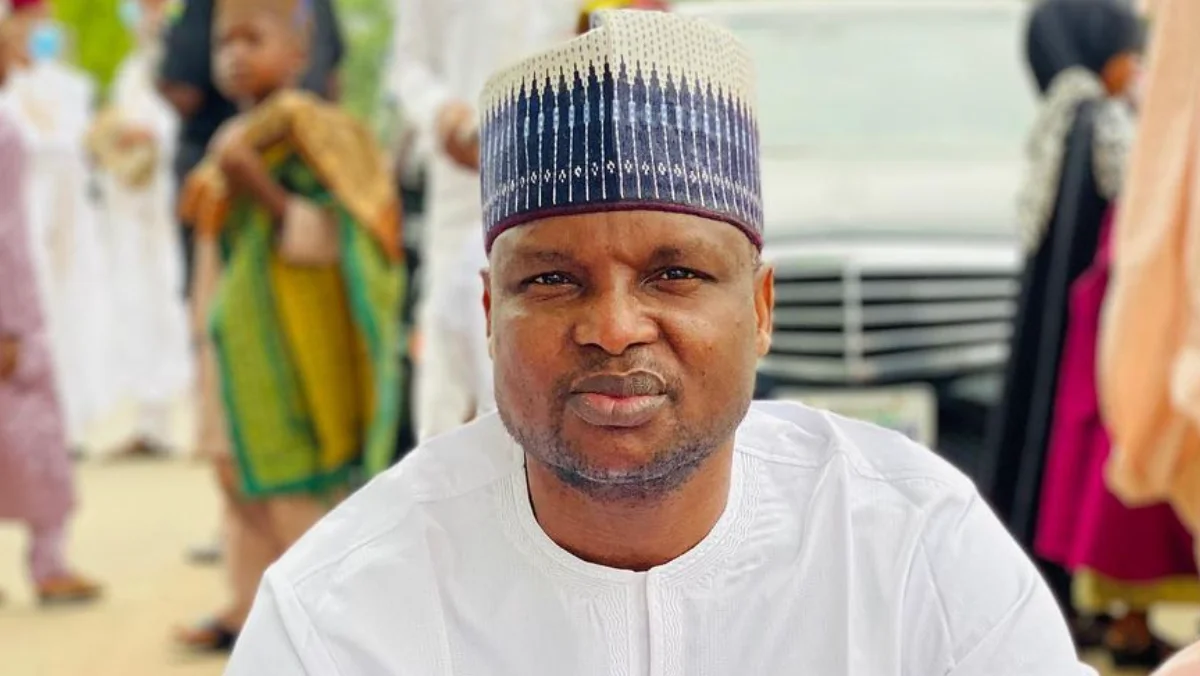
Mukhtar Adnan, an aspirant for the Kano State House of Assembly, has expressed that the Chairman of the Independent National Electoral Commission (INEC) is not trustworthy for managing Nigeria’s electoral process and supports calls for his removal from office.
In an exclusive interview, Adnan made the statement in response to the Supreme Council for Shari’ah in Nigeria (SCSN), which has called for the INEC chairman to step down due to alleged integrity and neutrality concerns.
Adnan states that the electoral body’s credibility is jeopardized if the chairman stays in his position, particularly in light of accusations that he contacted international organizations to claim Nigerian Muslims are perpetrating genocide against Christians.
“How do you expect neutrality from a man who has taken such a position?” Adnan asked.
“All evidence points to the fact that he is a tribalist and an ethnic jingoist, and such a person cannot be trusted to handle the electoral process in this country.”
He asserted that the letter, said to have been dispatched to the United States and the United Nations under the name of the chairman’s law firm, made false claims about genocide occurring in Nigeria.
According to Adnan, the chairman has not made a public denial of being the author of the letter, which exacerbates worries about his impartiality.
He emphasized that Nigeria is a country with diverse religions and ethnicities, and it is crucial for the leader of the electoral commission to be viewed as impartial and just by every demographic.
“I stand with the Supreme Council for Shari’ah in Nigeria. The man should bow out. The President should sack him,” he said.
He further stated that in the event of the removal of the INEC chairman, it is essential for the President to appoint a person of credible integrity, who is non-partisan and free from religious or ethnic bias, to safeguard the credibility of upcoming elections.
To maintain public trust, INEC must ensure complete neutrality – Nura Usman
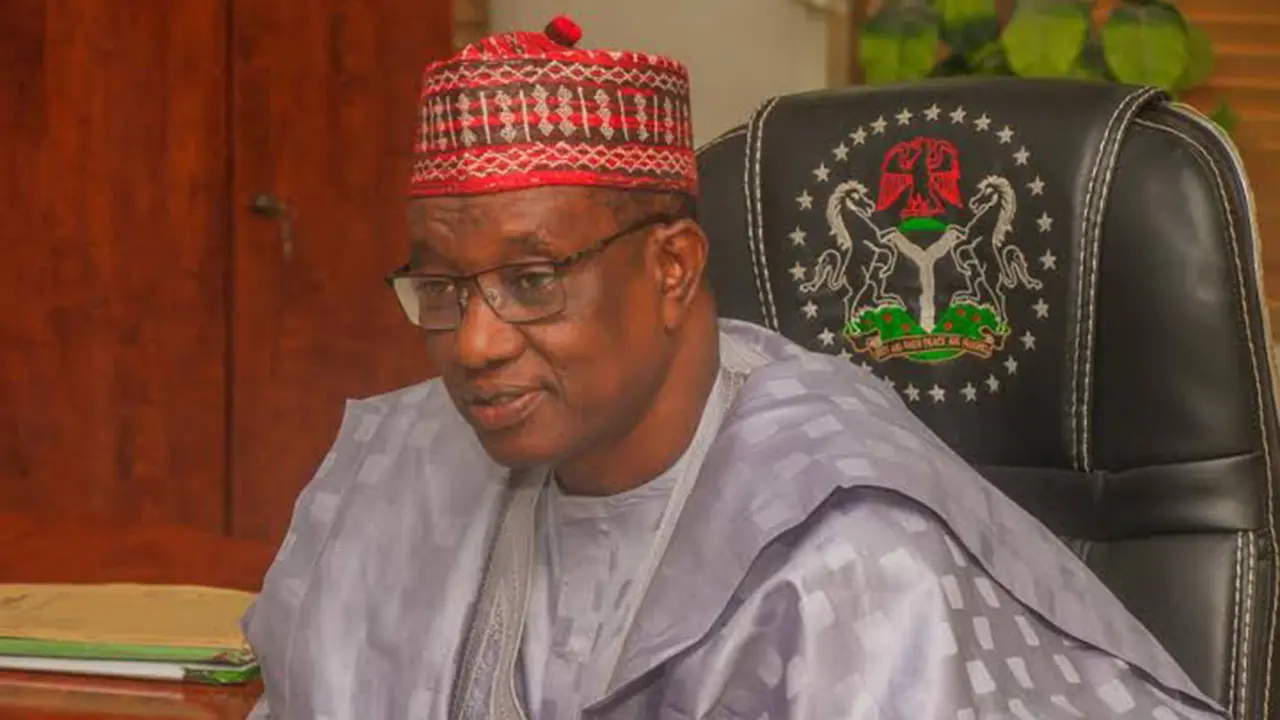
Comrade Nura Usman, a politician and youth activist with the Peoples Redemption Party (PRP) in Kaduna, has expressed support for the Supreme Council for Shari’ah in Nigeria (SCSN). He emphasized that the leadership of INEC must be entirely impartial to maintain public trust in Nigeria’s electoral process.
Usman stated that the concerns raised by the Council are too significant to ignore.
“The electoral leadership must be completely neutral to preserve public trust,” Usman said.
“By calling for fairness, accountability, and unity, the Supreme Council for Shari’ah is reminding the country that integrity and justice must guide our leadership.”
He cautioned that overlooking the Council’s request to remove the INEC chairman could lead to severe repercussions, particularly given the current state of deep religious and ethnic divisions in Nigerian politics.
“If this call is ignored, the immediate consequence will be loss of confidence in the electoral process,” he said.
“This can affect voter turnout and give opposition parties grounds to controversially challenge the legitimacy of any government that emerges.”
He believes that the long-term effects could be even more harmful.
“In the long run, it will lead to erosion of trust in institutions that are supposed to be independent, like INEC. It will also increase polarization along religious lines and deepen divisions in the country.”
Usman recognized that the demand for the chairman’s ousting may be viewed through a religious lens by some Nigerians, given that it originated from Muslim organizations.
He maintained, though, that this kind of interpretation fails to address the actual issue.
“We should not be looking at this from a religious or tribal point of view. It is not about targeting Christians or any minority group. This is a call for transparency, accountability, and neutrality in the electoral process.”
He noted that problems stemming from the controversy must be effectively addressed through firm measures taken by both the National Assembly and the President.
“Since the INEC chairman is still in office despite the legal brief he allegedly wrote, and the calls for his removal are growing, failing to address this will affect the entire electoral process,” he said.
Usman extended his accusations to the INEC chairman, claiming he had harmed Nigeria’s international reputation and labeling the purported legal brief as a threat to national unity.
“In a serious country, by now he should be answering questions for a treasonable felony. You cannot set up your own country before foreign bodies using lies and concocted facts and still be trusted to conduct elections. That is very dangerous.”
Usman contended that Nigeria should prevent what he termed religion merchants from affecting electoral behavior.
“Should we allow religion to be used to conduct an election that will be stained from the beginning? I think no,” he said.
Usman, in his call for resolute action, stated that the President’s best move would be to dismiss the current INEC chairman and replace them with someone who has no credibility problems.
“After removing him, the President can appoint another Christian from a minority group or from anywhere in Nigeria. Nobody cares about religion or tribe. What matters is integrity.”
He insisted that a person who is dealing with serious questions regarding their neutrality and character should not be allowed to lead a sensitive organization such as INEC.
“You cannot allow someone with many questions hanging over his head to continue to lead an important institution like INEC,” he said.
“INEC is too sensitive. Anything that touches its integrity must be removed.”
Usman additionally called on the President to involve stakeholders following any decision made.
“The President should dialogue with stakeholders and explain why the INEC chairman was removed and why he was replaced. That will help address concerns, uphold the rule of law, and affirm the independence of the Electoral Commission.”
He cautioned that permitting the current chairman to oversee future elections could lead to issues that might persist for decades.
“If he conducts the election, the problems may not be resolved even in the next 50 years,” he said.
Usman emphasized that Nigeria’s main focus must be on peace.
“As Nigerians, we must understand that peace is the most important thing. Without peace, there will be no Nigeria and there will be no election. The President must listen, and must act immediately.”
Please don’t forget to “Allow the notification” so you will be the first to get our gist when we publish it.
Drop your comment in the section below, and don’t forget to share the post.