David Akachukwu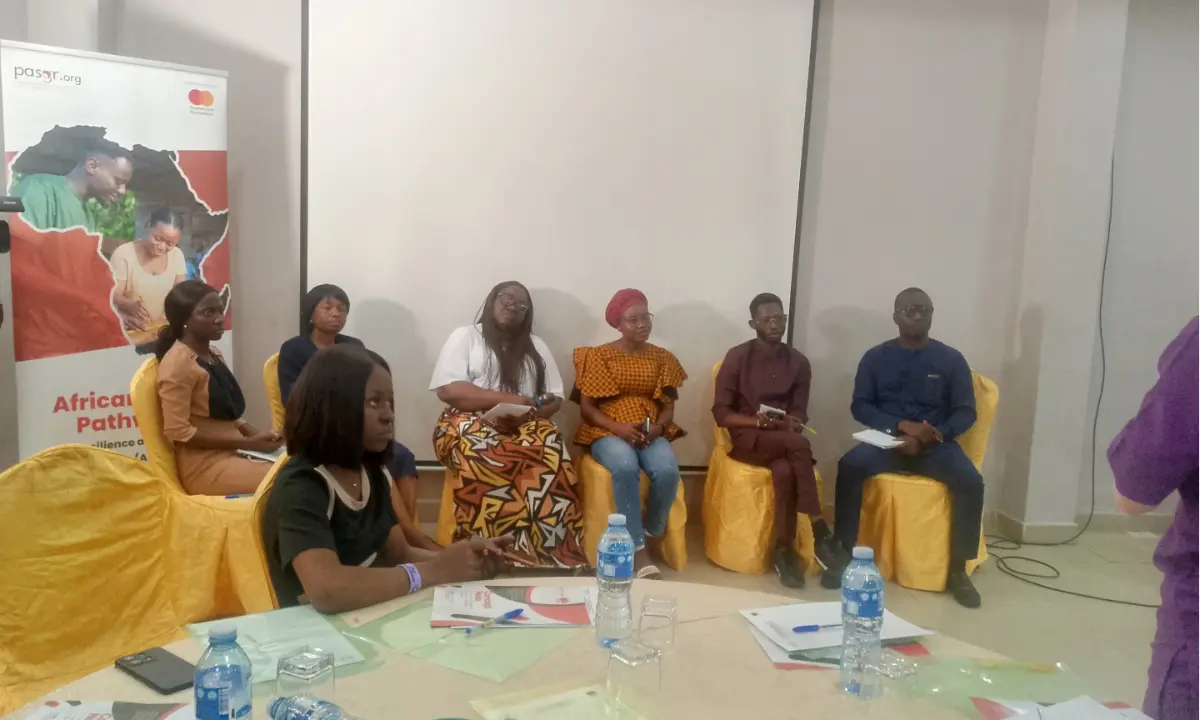
Keep up with the latest news and be part of our weekly giveaways and airtime sharing; follow our WhatsApp channel for more updates. Click to Follow us
Professor Bukola Akinbola, who heads the Department of Jurisprudence and International Law at the Faculty of Law, University of Ibadan, has called on the media to highlight the abilities of persons with disabilities rather than focusing on negative stereotypes.
She made this call on Tuesday during an event titled African Youth Pathways to Resilience and Systems Change (AYPReS), organized by the Partnership for African Social and Governance Research (PASGR) with support from the MasterCard Foundation.
In her remarks at the event, Akinbola emphasized that individuals with disabilities are just as human as anyone else.
She urged media professionals to shift their reporting to focus on the capabilities and positive contributions of people with disabilities, advocating for an end to biased or discriminatory coverage.
She said, “We should put an end to all manners of prejudice and discrimination. Persons with disabilities are also human beings like all of us. And anyone who needs additional materials to function properly has disability. If you can’t read without classes, that means you are also in that category.
“So, we should stop all forms of prejudice against persons with disabilities. We should not do anything to discriminate against them because they are also human beings like us.
“The media should project persons with disabilities in terms of their strength. What they are doing well. In terms of what they are doing and not based on prejudice and discrimination. Persons with disabilities are good in arts and sports”.
Dr. Pauline Ngimwa, who leads the Professional Development and Training Programme at PASGR, explained that the primary goal of the initiative is to better understand the experiences of marginalized youth and recommend suitable policy actions and support strategies to tackle their challenges.
“This intervention is focusing on youths, especially the marginalised ones. We want to understand their perceptions. We are also looking at the marginalised youths, youths with disabilities, these in internally displaced camps, informal sector and those in the rural areas”.
Also speaking, Dr. Babatunde Ojebuyi, the Principal Investigator for PASGR in Nigeria, noted that the project is designed to drive change through evidence-based policy development.
For further information on sport secret and greatest sport icon click here
Ojebuyi who is a senior lecturer at the Department of Communication and Language Art, University of Ibadan, said, “This programme is an inception programme in Nigeria to hear the voices of youths especially the marginalised ones. We are targeting the persons with disabilities, those in the IDPs and other areas.
“We went to hear their voices in a way that will bring policy change. We can’t describe for them. We need to hear from them. It is to bring about the Nigerian content into it because this programme is going on in ten countries in Africa and Nigeria is one of them”.
Please don’t forget to “Allow the notification” so you will be the first to get our gist when we publish it.
Drop your comment in the section below, and don’t forget to share the post


 Jonathan Nwokpor