Jonathan Nwokpor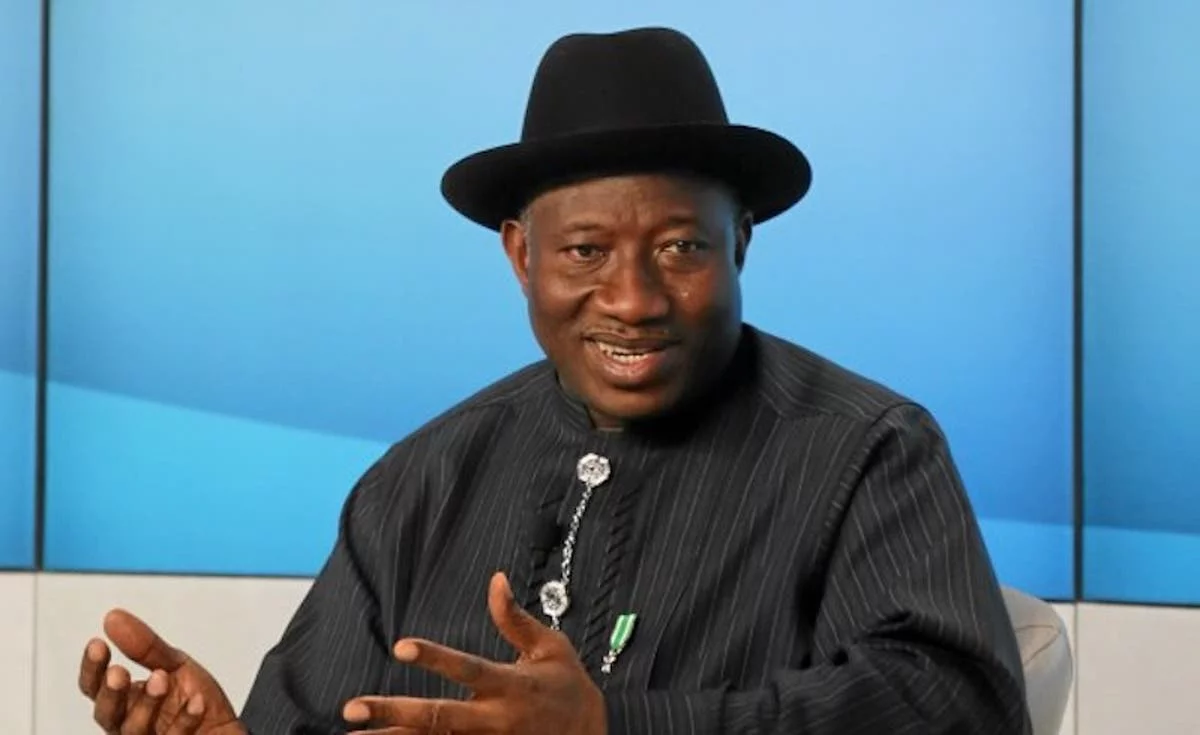
Former acting chairman of the Economic and Financial Crimes Commission (EFCC), Ibrahim Magu, has given reasons why former President Goodluck Jonathan was not summoned for interrogation over the disputed $2.1 billion arms procurement deal.
Magu explained that EFCC records indicated the funds involved were “not officially approved for campaign purposes,” based on official memos and documents examined by investigators.
This disclosure is contained in a book titled From Soldier to Statesman: The Legacy of Muhammadu Buhari, authored by Dr Charles Omole and unveiled at the Presidential Villa in Abuja.
The publication chronicles the life of the late former president, highlighting his military background as well as his political journey.
Omole stated that the management of the arms funds created deep divisions within the Peoples Democratic Party (PDP), leading to the questioning of several party leaders over alleged misappropriation of public funds.
He further observed that internal power struggles within the government led some analysts to describe former National Security Adviser (NSA), Sambo Dasuki, as a “co-president” working alongside Jonathan.
“Tensions reportedly simmered between NSA Dasuki and Defence Minister Aliyu Gusau as procurement authority and other vital functions gravitated to the NSA, leading some to see Dasuki as a ‘co-president’ alongside Jonathan,” Omole wrote.
The book also alleges that the probe unsettled senior figures within the PDP. It claimed that former PDP national chairman, Adamu Mu’azu, went into hiding, while the party’s former spokesman, Olisa Metuh, allegedly declined to refund N400 million paid to a company linked to him.
“By January, former PDP national chairman Adamu Mu’azu was wanted for questioning but was in hiding.
Former PDP spokesman Olisa Metuh… said he would rather starve than refund it; he was arrested,” Omole stated.
Other figures mentioned include former NIMASA boss Patrick Akpobolokemi, who was arrested, jumped bail, and later rearrested.
Six PDP zonal chairmen reportedly claimed they did not know the source of campaign funds they received.
Omole said Magu later clarified that Jonathan was not invited because investigation documents did not link him directly to campaign approval.
“He (Magu) lamented how well-funded legal defences stall cases, politicians who steal ‘N10bn keep N5bn for litigation,’ hire senior advocates, and exploit any investigative gaps.”
The book further notes that numerous senior members of the PDP accused the EFCC of targeting them unfairly as investigation files continued to accumulate.
Omole also disclosed that President Buhari directed the EFCC to probe 17 serving and retired military officers based on the recommendations of the Military Procurement Audit Committee.
Several Air Force officers were interrogated, including the late Air Chief Marshal Alex Badeh, who was later arraigned on charges of money laundering and corruption, including allegations that N1.4 billion in Air Force funds was used to purchase a mansion in Abuja.
According to the book, the audit committee’s second report identified 21 companies for EFCC investigation over suspicious contracts linked to the Air Force and the Office of the National Security Adviser, citing vague pricing and the movement of public funds for unclear purposes.
Please don’t forget to “Allow the notification” so you will be the first to get our gist when we publish it.
Drop your comment in the section below, and don’t forget to share the post.