Wisdom Engraced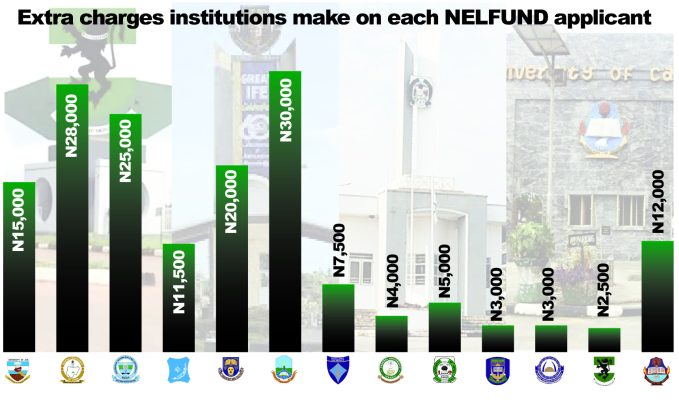
Keep up with the latest news and be part of our weekly giveaways and airtime sharing; follow our WhatsApp channel for more updates. Click to Follow us
At least 51 educational institutions in Nigeria have been implicated in illegal deductions and exploitation of the Nigerian Education Loan Fund (NELFUND) scheme. The institutions allegedly deduct between ₦3,500 and ₦30,000 from each student’s institutional fee, sparking concerns about transparency and accountability.
For further information on education, read more details here
Affected institutions include:
– Modibbo Adama University, Yola
– Yaba College of Technology (YabaTech)
– Lagos State University of Education (LASUED)
– Ladoke Akintola University of Technology (LAUTECH)
– Niger Delta University
– University of Port Harcourt
– Ignatius Ajuru University of Education, Port Harcourt
– Abubakar Tafawa Balewa University (ATBU), Bauchi
– Kaduna State University
– Federal University, Dutsinma
– Ebonyi State University
– Federal Polytechnic, Nasarawa
– University of Nigeria, Nsukka (UNN)
– Federal University of Technology Owerri (FUTO)
– Federal University of Health Sciences Otukpo, Benue State
– Abia State University
– Federal University of Technology Akure (FUTA)
– Federal University Lokoja (FUL)
– University of Maiduguri (UNIMAID)
– Ahmadu Bello University (ABU), Zaria
– Kano State University
– University of Calabar
– Federal University, Oye Ekiti (FUOYE)
– Bayero University, Kano (BUK)
– University of Ilorin (UNILORIN)
– University of the Abuja
– Obafemi Awolowo University (OAU), Ile-Ife
– Federal University, Otuoke, Bayelsa State
The affected institutions allegedly deduct unauthorised fees from students’ loan disbursements, with some charging extra amounts without clear explanations. Students have reported difficulties in getting refunds from their institutions. For instance, at the University of Jos (UNIJOS), instead of the ₦130,000 approved by the board as an institutional fee, NELFUND disbursed between ₦145,000 and ₦150,000 per student, leaving a differential of ₦10,000 to ₦20,000 per student.
NELFUND’s Managing Director, Akintunde Sawyer, emphasised
the agency’s commitment to holding institutions accountable for their actions. “Withholding critical financial information from students is unethical and a direct violation of the principles upon which NELFUND was established,” Sawyer warned. He noted that if left unchecked, the practice could undermine President Bola Tinubu’s genuine intentions for the student loan programme.
For further information on education, read more details here
The National Orientation Agency (NOA) has also taken a stance against the erring institutions. “The NOA feedback showed how specific institutions have deliberately delayed payments to successful applicants for personal financial benefit, in connivance with some banks,” the agency stated. NOA has directed its state directorates to provide further feedback from students across the country to ensure that the federal government takes appropriate action against erring schools.
Some analysts have suggested that NELFUND pay fees directly to students instead of institutions to eliminate the risk of misappropriation and ensure timely payments. The Initiator, Creative Change Centre, Omole Ibukun, expressed concern that the scheme has been “turned into a corrupt venture by schools” less than one year after its launch. Ibukun argued that the scheme has not only doubled the hardship of students but has left those who qualified for the credit facility confused.
The President of the National Association of Nigerian Students (NANS), Olushola Oladoja, said the association has launched a full-scale investigation into the matter. He disclosed that part of the probe is to meet with NELFUND and other relevant agencies to get to the root of the matter.
In response to the allegations, some institutions have acknowledged the issues and are working to resolve them. For example, FUTA’s Director of Corporate Communications, Adegbenro Adebanjo, said reimbursement would be done in batches and assured that due process would be followed. “Another reason for the slight delay in disbursement is that the fund was released in two tranches into the university’s CBN accounts,” Adebanjo explained.
As the situation unfolds, students and parents continue to express frustration and disappointment with the handling of the NELFUND scheme by some institutions. The outcome of the investigations and the response of the affected institutions will be crucial in determining the future of the scheme and the fate of students who have benefitted from it.
Please don’t forget to “Allow the notification” so you will be the first to get our gist when we publish it.
Drop your comment in the section below, and don’t forget to share the post