Jonathan Nwokpor
Keep up with the latest news and be part of our weekly giveaways and airtime sharing; follow our WhatsApp channel for more updates. Click to Follow
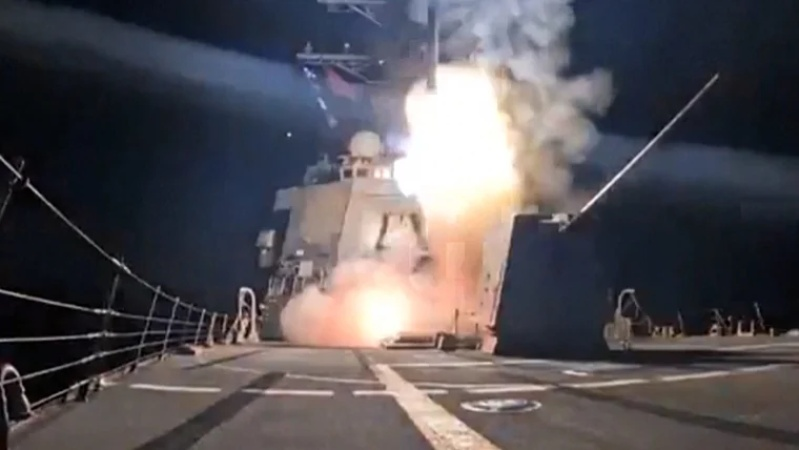
Dengiyefa Angalapu, a research analyst at the Center for Democracy and Development (CDD), has cautioned that Donald Trump’s recent threat of military action against terrorists in Nigeria could lead to foreign meddling in the nation’s internal affairs and exacerbate insecurity.
In an exclusive interview with DAILY POST, Angalapu stated that while Trump’s statement has sparked debate among Nigerians, it was crucial to examine the problems and determine why it struck a chord with some groups.
He claims that because Nigeria is a multiethnic and multireligious country, its conflict landscape is complicated, with many groups viewing insecurity via ethnic or religious prisms.
“Nigeria is multi-ethnic and multi-religious. If you examine the current conflict dynamics, although we have insecurity across all the six geopolitical zones, there is some kind of ethnic and religious correlation to it,” he explained.
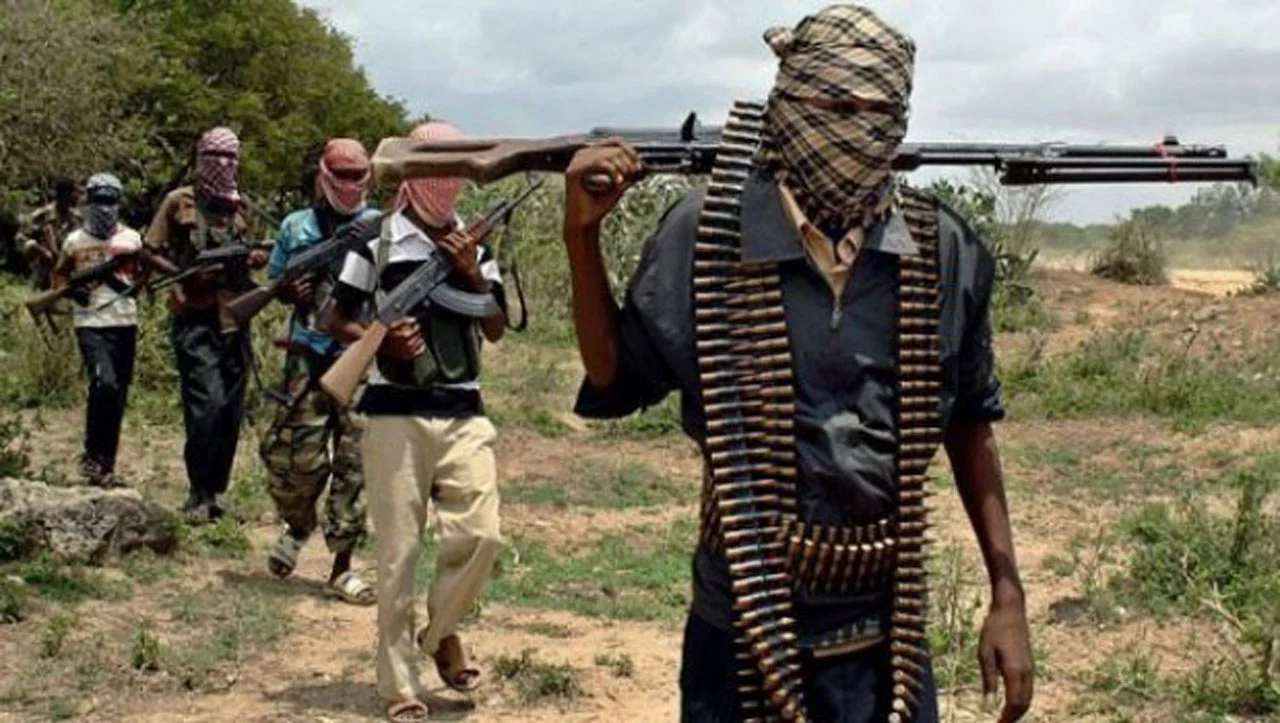
He noted that while the situation is more complicated in the North-West and North-Central, organizations like Boko Haram and ISWAP in the North-East are motivated by jihadist beliefs that seek to establish an Islamic state.
“In the North-East, you have Boko Haram, which is basically against western influence and education, but there is something fundamental about their activities, they are jihadist groups seeking to establish an Islamic state,” he said.
“In the North-Central, you also have groups like Ansaru and the Lakurawa who seek to establish an Islamic state. But bandits are more criminal and economic in nature rather than ideological.”
He pointed out that the majority of these organizations identify as Muslims, which has led many Christian communities to believe that attacks are motivated by religion.
“One common trend about all these groups is that they profess Islam, whether they adhere to it or not is another conversation,” he said.
“So, even when you have farmer-herder conflicts that are not religious in nature, the interpretation by many Christians is that the perpetrators are Muslims and probably propagating an Islamic agenda.”
According to Angalapu, mistrust between Muslims and Christians has increased as a result of Boko Haram’s attacks on churches and Christian communities.
“There is evidence that Boko Haram, JAS and ISWAP have targeted churches and people for being Christian because their logic is to have an Islamic state,” he stated.
“But the Muslim community also argues, rightly, that the terrorists have killed Muslims too and attacked mosques.”
He claimed that this gap has grown to be a significant barrier to Nigeria’s war against terrorism.
“Rather than uniting to confront the common enemy, Nigerians are now arguing about who is dying more or who is being displaced more,” Angalapu said.
“This polarization weakens our ability to fight terrorism effectively.”
The CDD expert cautioned that foreign forces may be able to influence because of Nigeria’s counterterrorism activities’ internal division and lack of coordination.
“It creates an opening for foreign intervention. The U.S. has already threatened military action, and Russia operates in nearby Sahelian states like Mali and Burkina Faso. This could easily bring U.S.-Russia rivalry into Nigeria.”
He clarified that Russia might see a military intervention by the United States as an attempt to enter the Sahel through Nigeria’s northern borders.
“Nigeria has not had ambassadors in the U.S. and many other countries for about two years. Since President Tinubu came on board, he hasn’t appointed ambassadors. That creates a foreign policy gap because the U.S. hears rumors and third-party information instead of Nigeria speaking for itself.”
Angalapu stated that Nigeria’s lackluster foreign policy presence exacerbated the situation.
“All of these are happening because of the failure of the Nigerian security architecture,” Angalapu said.
“If security and protection of lives were at an optimal level, we wouldn’t be having a situation where we are blaming each other for who is being killed more.”
He also noted that one of the main causes of the crisis was Nigeria’s security system’s failure.
Additionally, he cautioned that cooperation has become more difficult due to recent internal changes.
“Tinubu himself has changed the service chiefs, you know, and all of those stuff. So there’s a lot of incoordination.
According to Angalapu, the United States’ dissatisfaction with Nigeria’s recent foreign policy decisions may also be connected to Trump’s remarks.
“This could be a cover-up for some of the vexations of the U.S. against Nigeria. Nigeria joined BRICS, which aligns with Russia and China, and that may not sit well with the U.S.”
“Ghana, Rwanda, and Uganda accepted the U.S. third-country deportation policy, but Nigeria said no. That was a frontal attack on the ego of the U.S., and they are bound to retaliate in some way.”
According to the researcher, Nigeria’s counterterrorism activities have become tense and disorganized as a result of Trump’s statement.
“What has happened is that it has discoordinated us. We are rushing to show results, and that creates tension. When you are tense and lack confidence, a lot of things can go wrong.”
He cautioned that the military might make expensive mistakes in its haste to demonstrate progress.
“Bringing quick results has disadvantages. It could lead to more airstrikes in communities, and we have seen how mistaken airstrikes have killed civilians.”
“In most of these camps, terrorists use the people they have kidnapped as cover. If you want to kill 10 terrorists, should you kill 20 innocent people just to do that? Those are the hard choices our forces face.”
In closing, he called for improved cooperation and composure in overseeing Nigeria’s counterterrorism response while characterizing the situation as complicated.
“It’s a very complex situation. I hope Nigeria gets out of it soon.”
Please don’t forget to “Allow the notification” so you will be the first to get our gist when we publish it.
Drop your comment in the section below, and don’t forget to share the post.