David Akachukwu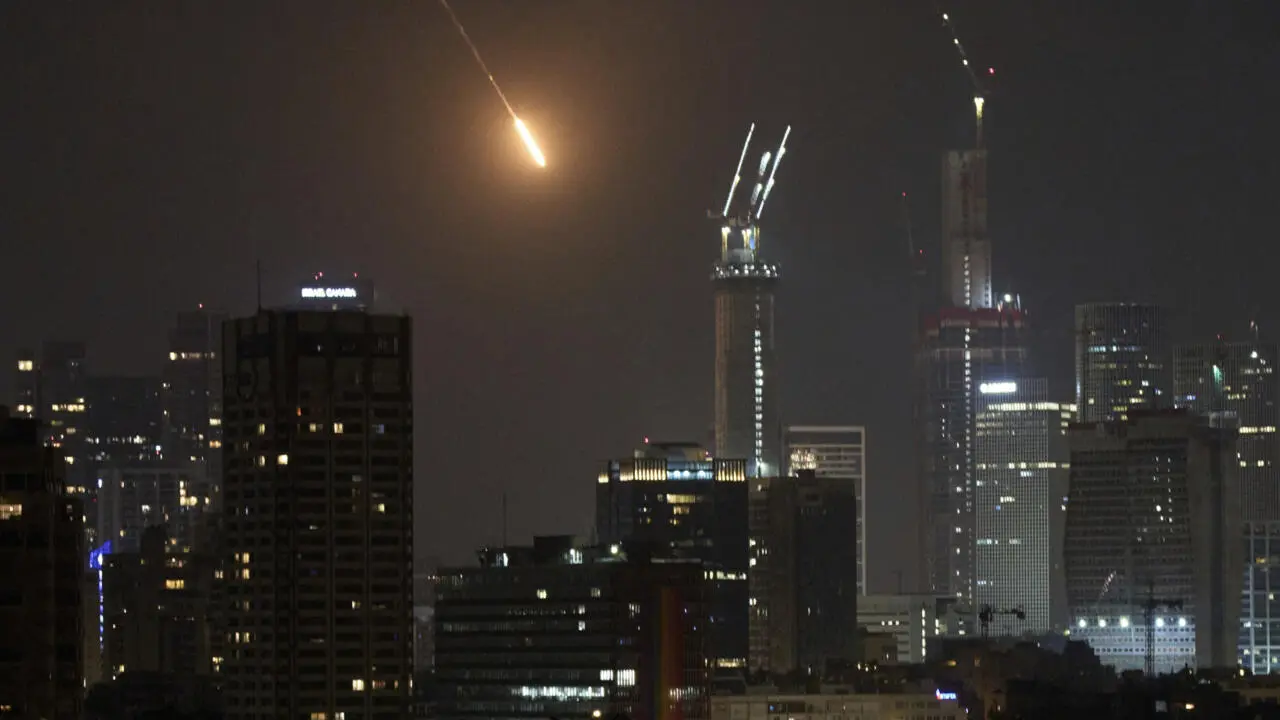
Keep up with the latest news Keep up with the latest news and be part of our weekly giveaways and airtime sharing; follow our WhatsApp channel for more updates. Click to Follow us
A growing confrontation between Israel and Iran has sparked renewed global alarm, as world leaders caution that the conflict could spiral into a broader regional war.
The escalation began after Israel launched a wide-ranging aerial offensive early Friday, focusing on Iranian military and nuclear installations.
Struck locations reportedly included nuclear development centers in Natanz, Fordo, and Isfahan, along with major military command sites.
The air raids, carried out on a Friday an established day of rest in Iran allegedly resulted in the deaths of top Iranian officials and nuclear experts.
In retaliation, Iran labeled the offensive a “declaration of war” and fired missiles at several Israeli urban centers, among them Tel Aviv and the Gush Dan area.
Reports from Israeli outlets indicated multiple injuries, with at least one confirmed fatality due to the missile attacks.
Notable Updates:
Targeting of Nuclear Facilities:
Israeli missiles were aimed at a subterranean uranium enrichment complex in Natanz. Iran acknowledged some damage but claimed minimal impact at Fordo and Isfahan. Meanwhile, the UN’s nuclear agency stated radiation levels near those facilities remained within safe limits.
Loss of Senior Commanders:
Iran confirmed the deaths of prominent military leaders, including Hossein Salami of the Revolutionary Guards, military chief Mohammad Bagheri, and Amirali Hajizadeh, who oversaw Iran’s missile development program.
Iran’s Retaliatory Strikes:
In response, Iran launched over 100 drones and missiles toward Israeli targets. Israeli defense systems intercepted most of them, though some caused injuries and prompted widespread siren alerts across central parts of the country.
For further information on sport secret and greatest sport icon click here
Airspace Closures:
Countries including Iran, Iraq, Jordan, Syria, and Israel temporarily shut down their airspace. Numerous flights were canceled due to growing safety concerns.
Internet Shutdowns and Security Measures:
Iran imposed restrictions on internet access nationwide, citing security reasons. Officials stated that full connectivity would return once stability was restored.
Reactions from Global Bodies:
An emergency session was held by the UN Security Council. UN chief António Guterres appealed to both nations to avoid further escalation and seek diplomatic solutions.
The International Atomic Energy Agency also scheduled a special session for Monday in response to the crisis.
Reaction from the United States:
Though reports indicated that U.S. authorities were briefed on Israel’s plans ahead of time, President Donald Trump denied any active participation.
He issued a firm warning to Iran, suggesting future Israeli operations “could be even more brutal” and advised Tehran to de-escalate tensions.
Concerns Over Nuclear Development:
Iran continues to assert that its atomic energy efforts are for peaceful purposes, although uranium is currently being enriched at 60% purity—far exceeding the limits outlined in the now-defunct 2015 nuclear agreement.
Scheduled nuclear negotiations set to take place in Oman this weekend have been canceled due to the ongoing hostilities.
What Lies Ahead?
With more than 200 reported Israeli airstrikes and Iran continuing its countermeasures, fears are rising that other countries in the region may soon become involved.
Experts also warn of potential economic repercussions, particularly if rising tensions disrupt oil traffic through the Strait of Hormuz—an essential passage for global oil transport.
World leaders continue to call for restraint, but the situation remains unpredictable, with neither nation showing intent to ease hostilities.
Please don’t forget to “Allow the notification” so you will be the first to get our gist when we publish it.
Drop your comment in the section below, and don’t forget to share the post.


 Jonathan Nwokpor