Mazi Nwokpor Jonathan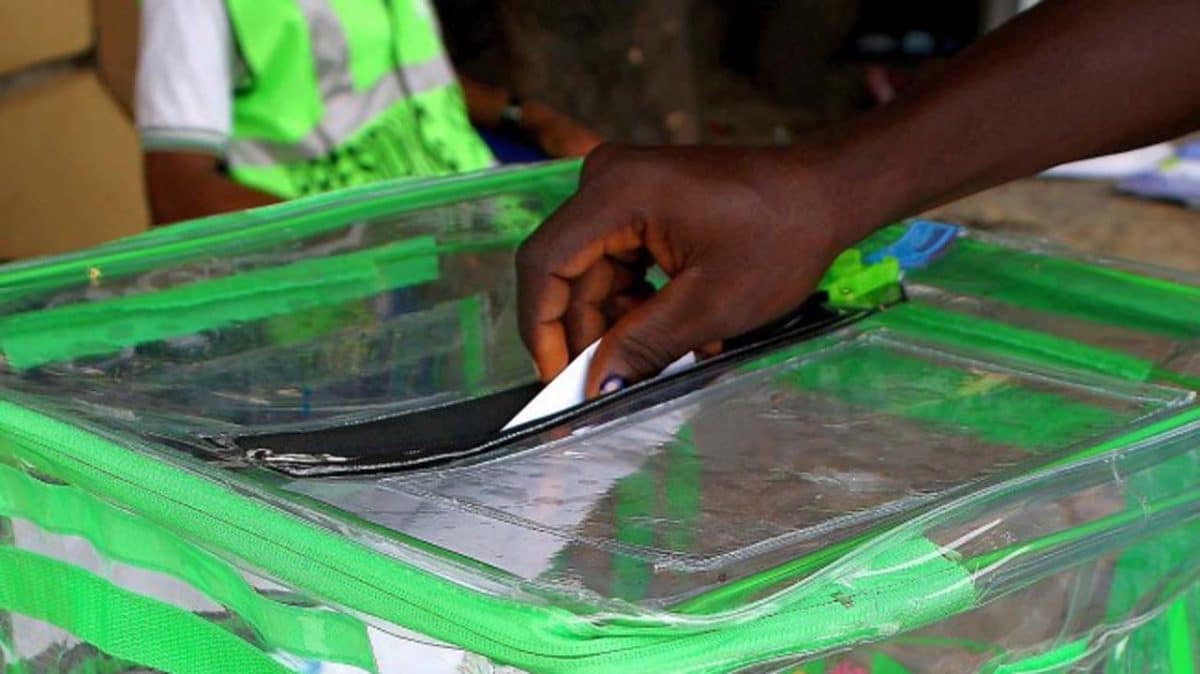
Keep up with the latest news and be part of our weekly giveaways and airtime sharing; follow our WhatsApp channel for more updates. Click to Follow us
2027: Osun outcome tests Nigerians’ resolve against vote buying, electoral manipulation
The result of the Osun State governorship election has triggered fresh political debate ahead of the 2027 general elections.
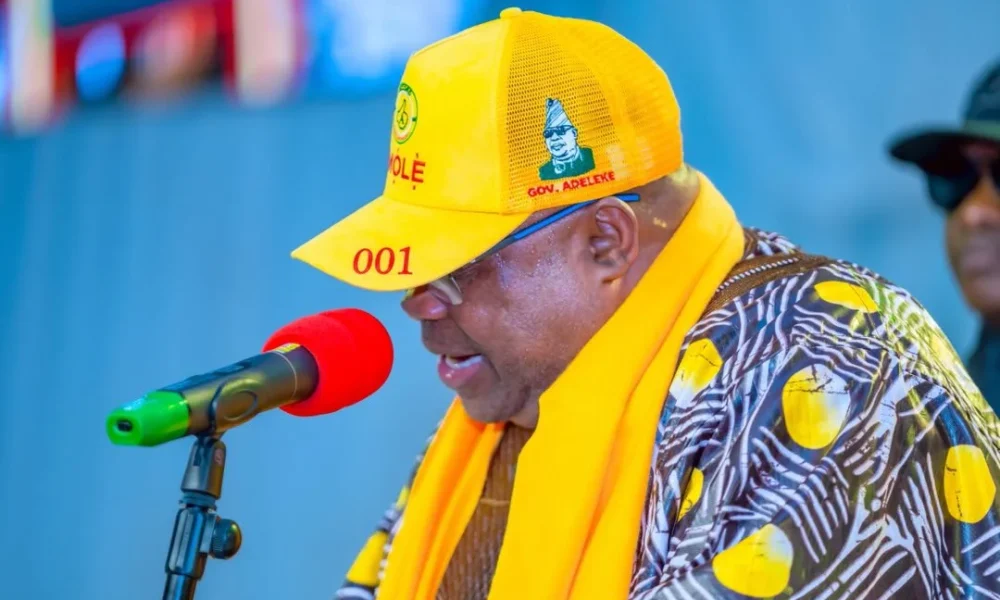
ZINGTIE recalls that Governor Ademola Adeleke of the Accord Party emerged victorious in the Osun governorship election with 511,067 votes, while the APC candidate, Bola Oyebamiji, polled 444,815 votes. ADC’s Najeem Salaam came third with 17,180 votes. Adeleke secured victories in 19 of the state’s 30 local government areas, while Oyebamiji won 11.
Political observers have offered differing opinions on whether voters across Nigeria can reproduce the determination displayed by Osun residents in resisting electoral manipulation and monetary inducements.
The observers said replicating such resistance across the country would depend on several issues, especially stronger grassroots mobilisation and increased voter awareness. They, however, warned that major structural challenges could hamper such efforts.
The political analysts and civil society groups have pointed to the high voter turnout and community-level vigilance as factors that helped prevent political intimidation and the influence of large financial inducements.
However, they noted that extending the experience from a state-level election to a nationwide presidential and general election would come with different challenges.
The Osun election has also offered Nigerians several lessons, including the “Collect and Vote Your Conscience” approach.
One notable development during the election was the decision by some voters to accept cash and food items offered by political agents while still voting according to their preferred choices. In some polling units, groups of voters reportedly drove away individuals involved in vote buying.
The high turnout of voters also contributed significantly to efforts to frustrate electoral manipulation.
Osun recorded a turnout of over 40 per cent. Civil rights experts said a strong presence of voters at polling units makes it considerably more difficult to manipulate election results.
Many residents did not leave immediately after casting their ballots. They stayed behind during the counting, captured results with their mobile phones and monitored the figures to ensure they corresponded with what was announced before the official collation.
While Osun residents have been commended for their determination, some politicians, particularly those in the ruling party, argued that Adeleke’s re-election was largely enabled by President Bola Tinubu.
In what appeared to reinforce that position, Governor Adeleke visited the Presidential Villa shortly after he was declared winner of the August 15 election, where he acknowledged President Tinubu and credited the victory to the President’s goodwill.
Adeleke said Tinubu provided an environment for a fair and transparent election and expressed his appreciation to the President for allowing the democratic process in Osun State to proceed without interference.
Similarly, Minister of the Federal Capital Territory, Nyesom Wike, argued shortly after the election that the result was not primarily a reflection of Adeleke’s popularity or the preference of voters, but rather the President’s decision.
Wike said he would have travelled to Osun State to work for an APC victory if President Bola Tinubu had desired the party to win the governorship election.
A chieftain of the Peoples Democratic Party, PDP, Dr Adetokunbo Pearse, a former governorship candidate and convener of Reset Lagos PDP, while speaking about whether voters nationwide could reproduce the resistance demonstrated by Osun voters, warned that Nigerians should prepare for a repeat of what he described as terrorism allegedly perpetrated by the APC in Osun during the governorship election.
He further argued that not all states would possess the strength to withstand the APC in the same manner Adeleke was able to do in Osun, warning that the 2027 general election could be bloody.
He said: “I believe that the issue of vote buying has never been as effective as most people think. I’ve been in many elections, and I know that in spite of the fact that people are offered money, they usually vote their conscience.
“Most people vote their conscience. Think about this: if it was a question of money, Peter Obi would not have won any state in 2023.
“People wanted to vote out Tinubu in Lagos, and when the presidential election came, people voted against Tinubu in Lagos, and he lost in Lagos.
“Obi had no money; he won in 12 states. So, you know, Nigerians are not as corrupt.
“Nigerian voters are not as gullible and sellable as people think. What usually happens is that the political power has all the machinery to use to force people to vote for them.
“They steal the vote. You know what the former national chairman of the APC, Ganduje, said: ‘We are going to go there and we are going to conquer. We are going to carry it by force.’
“Tinubu himself will say, ‘Take it, grab it, and run away with it.’ Yes, that’s their mantra. They tried it in Osun State. I don’t want people to get something wrong about what happened in Osun. They did it in Osun.
“Otherwise, they would not have had the number of votes they had. They lost by 66,000 votes. They would have lost by 200,000 votes if it was not for the fact that they took an army over there to capture the vote. That’s what happens in our elections.
“So what happened in Osun was that the governorship candidate, the incumbent Governor Adeleke, was able to match them force for force.
“When they brought in machinery, all their big guns with a lot of money, people took the money and people voted for them. Don’t forget that the 66,000-vote difference doesn’t… it’s not the kind of margin that they would have got.
“They would not have got 20 per cent of the votes they got if it wasn’t for the fact that they forced their way through.
“Vote buying, intimidation, rigging, all of it went on in Osun State. So, the lesson from Osun for people is that not only do you vote your conscience, you stay with the vote, you follow the vote all the way from the polling units to the collation centres, and that is what they did in Osun.
“So, we should expect the same thing that happened in Osun to happen in every state in the general election, and that means that the party in power, the APC, as always, will use intimidation, violence and vote buying.
“Not every state can survive like Osun. So, let us not be carried away by what happened in Osun. Not every state has a sitting governor and a Davido and an Adeleke family dynasty, which has a lot of clout.
“So, in spite of the fact that people loved Adeleke and wanted to vote for him, he would have lost, you know, if it was not for the fact that he had a very strong family line.
“Yes, he had a very strong support base from members, friends and so on. So, we have to be very careful. What we saw was frightening. In spite of the victory of the people, I am afraid that 2027 is going to be bloody.”
On her part, former Country Director of ActionAid Nigeria and member of the Steering Committee of the Nigerian Civil Society Situation Room, Ene Obi, faulted politicians for taking advantage of citizens’ hunger and turning financial inducements into a major feature of elections in Nigeria.
She raised concerns over the failure to arrest individuals involved in what she described as a disgraceful spectacle at polling units, as well as the bribery allegedly carried out before and during elections.
Obi declined to hold citizens responsible for accepting the money, pointing to the severe economic hardship that has continued to worsen living conditions across the country.
However, she urged the Independent National Electoral Commission, INEC, to improve privacy arrangements at polling units, saying this would enable voters to exercise their conscience at the ballot box regardless of whether they had accepted financial inducements.
She told said: “The reality is that INEC must protect citizens because, in some cases, the money is distributed even before they arrive at the polling unit. Voting should be a private matter.
“One notable observation I made in various locations during the Osun 2026 elections was the active involvement of citizens.
“I recall a specific polling unit in Osogbo town, which was considered a red zone. As the voting process was about to commence, one of the party agents pointed out that the placement of the voting cubicle was inappropriate.
“He insisted that the location be changed to ensure the privacy of the voting cubicle. I was pleased to see a young man take on that responsibility, and they successfully relocated the polling unit to a spot where voters could maintain their privacy, which was commendable.
“No one challenged this decision. Thus, safeguarding the voting cubicle equates to safeguarding the votes for Nigeria.
“If voting occurs in privacy and it is not visible to others, what will be the outcome?
“Therefore, we cannot simply condemn individuals who accept money. Naturally, one might question why anyone would accept money or allow their conscience to be bought.
“However, we are conducting this election at a time when over 100 million, and possibly now more than 150 million, individuals live below the poverty line.
“Given this situation, how many people can resist when offered N15,000 in exchange for showing their voter card, especially when they are struggling to find food? People are suffering from hunger, and instead of utilising state resources to support your citizens, which you pledged to protect, you resort to bribery to secure their votes. I believe there is a pressing need for enhanced citizens’ education.
“We need more citizens. Voter education is very, very important. Active citizenship is very important. The lifeblood of democracy is active citizenship. If citizens stop asking, do they think that there are no alternatives?
“Because this cannot go on; we can’t continue to go on like this. What we are seeing now, campaigning has been found, and you are making public servants part of your campaign team.
“You look at the amount of money that they are mentioning, N60 billion or whatever. Why are you weaponising poverty? You are stealing from Nigerians, and you are insulting them by giving them N15,000.
“For four years, you never did anything. You are not making headway with your promises to the people. The easiest way is to use money to buy the conscience of the people. God doesn’t forgive.”
Please don’t forget to “Allow the notification” so you will be the first to get our gist when we publish it.
Drop your comment in the section below, and don’t forget to share the post.