Mazi Nwokpor Jonathan
Keep up with the latest news and be part of our weekly giveaways and airtime sharing; follow our WhatsApp channel for more updates. Click to Follow us
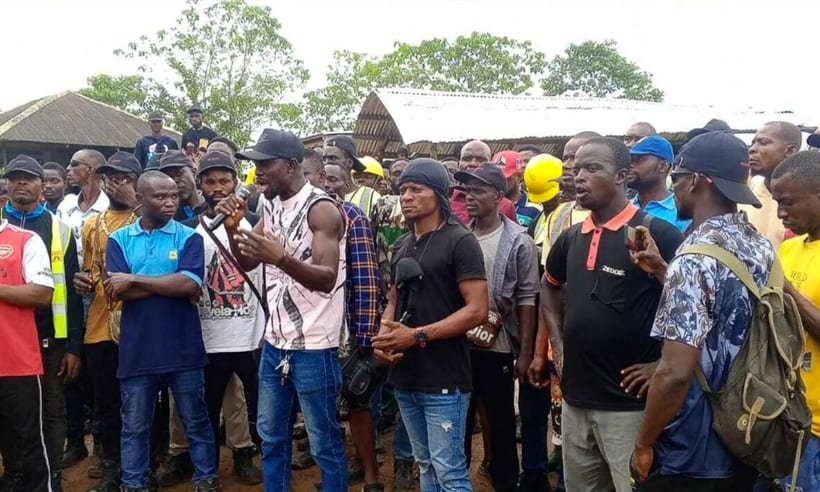
Workers engaged on Section 3B of the Lagos-Calabar Coastal Highway project have called for the removal of expatriate managers over allegations of salary cuts, outstanding entitlements, intimidation and unfavourable working conditions.
The workers launched their protest on Monday and vowed to continue until the issues raised were resolved. Security operatives, including soldiers, have since been deployed to the construction site.
They also called for the return of Mr Asuquo Ukpayang as Cross River Liaison Officer, claiming that expatriate managers were unwilling to work with him because he stood up for the workers’ interests.
Esikere Peter, a quality control and laboratory staff member, told reporters that management had allegedly reduced the number of paid working hours, leading to lower salaries. He further claimed that some night shifts that lasted until 11 p.m. were not included in workers’ official records.
Peter also accused an unnamed project manager of unfairly dismissing employees, intimidating them and issuing threats. He alleged that some workers faced punishment for requesting materials required to carry out their assignments.
“We are demanding the removal of the project manager, the site manager and the earth-moving supervisor, who have continuously treated workers unfairly,” he said.
He stressed that the demonstration was not aimed at damaging property or triggering violence, but was intended to secure fair treatment and respect for Nigerian workers.
Stephen Oke, a trailer driver on the project, similarly accused the expatriate managers of treating Nigerian staff with disrespect and subjecting them to intimidation. He alleged that local workers carried out much of the work under difficult conditions but received inadequate pay.
Ana Matthew, who works in earth-moving operations and level checking, claimed that workers were exposed to extreme weather without sufficient shelter. She also alleged that their pay was reduced despite working both day and night shifts.
Matthew further claimed that scrap materials previously distributed among workers were sold without their approval. He also accused the authorities of deploying military personnel to the site to intimidate those taking part in the protest.
Some female employees separately raised concerns over the alleged absence of dedicated toilet facilities for women. They claimed that expatriate workers had access to several restroom facilities while local female staff lacked separate provisions.
In his response, Ukpayang confirmed that he knew about the workers’ complaints concerning salary deductions, unpaid benefits and alleged unfair treatment.
He said Mrs Eyoanwan Otu, wife of the Cross River State governor, had earlier brought concerns about the welfare of the workers to the attention of the company’s management.
Ukpayang promised to hold discussions with the company’s top officials and local management, the Federal Controller of Works and the Minister of Works in a bid to facilitate negotiations. He appealed to the protesters to maintain peace and select representatives to participate in the discussions.
However, the workers maintained that Ukpayang was the only person they wanted to represent them during the negotiations.
Attempts to obtain comments from the company were unsuccessful, as calls and messages sent to its representatives received no response.
The Lagos-Calabar Coastal Highway is a federal road project intended to link Lagos, Ogun, Ondo, Edo, Delta, Bayelsa, Rivers, Akwa Ibom and Cross River states.
Please don’t forget to “Allow the notification” so you will be the first to get our gist when we publish it.
Drop your comment in the section below, and don’t forget to share the post.