Mazi Nwokpor Jonathan
Keep up with the latest news and be part of our weekly giveaways and airtime sharing; follow our WhatsApp channel for more updates. Click to Follow us
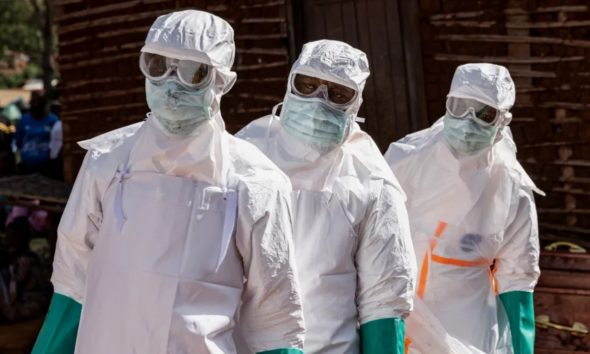
The Nigerian Senate has urged the Federal Government to release emergency funding from the service-wide vote to reinforce disease surveillance and enforce mandatory health checks for every international traveller arriving in the country.
The lawmakers also advocated compulsory screening at international airports, seaports and approved land border crossings to prevent Ebola and other infectious diseases from entering Nigeria.
The resolution was reached following a motion of urgent national importance presented by Senator Francis Faduyile, who raised concerns about the spread of the Bundibugyo Ebola virus and the possible danger it poses to Nigeria’s public health system.
Faduyile explained that the outbreak, which began in the Democratic Republic of Congo (DRC), had spread to other African nations, including Uganda and Kenya. He warned that the development increased the possibility of infected individuals reaching Nigeria through countries used as transit points.
The senator also cited an assessment by the Nigeria Centre for Disease Control and Prevention (NCDC), which identified a high risk of Ebola being introduced into Nigeria.
He drew attention to the 2014 Ebola outbreak in the country, when an infected traveller brought the virus into Lagos, stressing the importance of strengthening disease prevention measures at Nigeria’s entry points.
While acknowledging the measures already introduced by the government, including health declaration forms and enhanced surveillance at entry points, the Senate expressed concern that current screening procedures covered only travellers arriving from certain countries.
According to the lawmakers, limiting screening to selected countries could leave gaps in Nigeria’s disease surveillance system and increase the risk of preventable public health emergencies.
The Senate also raised concerns over inadequate personnel and a shortage of essential screening equipment at some entry points. It further noted that Port Health Services continues to operate under the Quarantine Act enacted in 1926.
The lawmakers warned that the country’s existing health challenges, including Lassa fever, cholera and diphtheria, made it imperative to strengthen preparedness for emerging infectious diseases.
Following its deliberations, the Senate directed the Ministry of Health and Social Welfare, the NCDC and Port Health Services to make health screening compulsory for all international passengers entering Nigeria, irrespective of their nationality or country of origin.
The recommended screening procedures include completing health declaration forms, checking body temperatures and examining passengers for symptoms associated with infectious diseases.
The lawmakers also proposed enhanced checks for travellers who had visited or transited through affected locations within the preceding 21 days.
Additionally, the Senate called for departure screening for passengers travelling out of Nigeria whenever a public health emergency has been declared.
The chamber urged the Federal Ministry of Health and Social Welfare, the Federal Airports Authority of Nigeria (FAAN) and the Nigeria Immigration Service to provide entry points with adequate numbers of trained Port Health officers, thermal scanners, protective equipment and isolation facilities.
It also appealed to the Federal Government to ensure that isolation and treatment centres in all 36 states and the Federal Capital Territory are properly equipped and ready to manage potential disease outbreaks.
Addressing the need to strengthen the legal framework for disease control, the Senate called for the repeal and replacement of the Quarantine Act of 1926 with modern public health legislation aligned with the International Health Regulations of 2005.
The lawmakers further urged the ministries responsible for finance, budget and economic planning to make adequate provisions for the NCDC and Port Health Services in the 2027 national budget.
They also called for the release of outstanding funds to enable the agencies to intensify disease surveillance and strengthen Nigeria’s ability to respond effectively to public health emergencies.
Please don’t forget to “Allow the notification” so you will be the first to get our gist when we publish it.
Drop your comment in the section below, and don’t forget to share the post.